Every journey begins quietly…
Not with a grand announcement or a perfectly written plan, but unexpectedly with a series of small moments, matters of chance, questions, observations that leave the mind, and experiences that slowly demand to be shared.
This platform, where agroforestry meets agriculture, was born from such moments. It’s a story of two people-partners in life, husband and wife-who walked different paths, learned from different places, but kept returning to the same question:
Can farming feed people without exhausting the land that feeds us?
Two Paths, One Purpose
One of us grew deeply into the world of forestry, agroforestry, and research, spending years studying trees, landscapes, biodiversity, and the delicate balance between conservation and livelihoods. The other engaged closely with agriculture, food systems, people, and everyday realities, observing how farming decisions affect nutrition, income, and household resilience.
Over time, our professional lives become interconnected with our personal ones. Discussion about research papers blended with conversations about farmers’ struggles. Field visits turned into shared reflections. Observations from tribal landscapes, homegardens, plantations, and community forests became part of our everyday thinking.
Slowly, we realized something important:
Agriculture and agroforestry are often spoken about separately, but in reality, they are deeply connected in traditional systems that our ancestors practiced.
What We Kept Seeing on the Ground
While growing up in villages, we witnessed wider farm bunds where farms were clearly demarcated with planting of edible fruit trees such as tamarind, mango, amla, jamun, etc. Our grandfather and father used to tie their livestock to those trees, which were freely moving all around the farm boundaries. But nowadays, the true practice of agriculture is disappearing. The concept of commercial agriculture has made farmers greedier, and bunds have become narrower; in many places, they have disappeared altogether.
In many places, farming had become simplified, sometimes too simplified. Few may get bumper harvests, but uncertain income and indebtedness were common stories. Single crops, heavy dependence on external inputs, declining soil fertility, groundwater depletion, and pest and disease outbreaks make farmers reluctant to engage in agriculture.
Yes, alongside these challenges, we kept seeing something else.
We saw farms where trees still stood, protecting soil, offering food and fuelwood, medicine, shade, and shelter. We saw traditional systems, where crops, trees, and livestock coexisted naturally. We saw farmers who might not call their practices as Agroforestry, yet practiced it.
A Gap We Noticed
As researchers, educators, and field practitioners, we noticed some gap.
- Traditional wisdom was slowly disappearing
- The farmer’s experiences were ignored or undervalued
- Scientific knowledge often stayed locked in journals
- Students struggled to connect theory with reality
- Sustainable practices were discussed, but not always explained simply
We often found ourselves explaining the same ideas again and again to students, farmers, friends, and colleagues:
- Why trees on farms matter
- How agroforestry supports income and nutrition
- Why diversity makes farms more resilient
- How our rooted traditional practices still hold answers
At some point, we asked ourselves:
Why not create a space where all this knowledge can live together?
Why a Blog? Why this Platform?
This platform is not created to impress. It was created to express and connect.
We wanted a space where:
Welcome to Where Agroforestry Meets Agriculture, a platform dedicated to exploring the harmony between trees, crops, people, and landscapes. The initiative was started on November 13, 2024, with the motto of integrating knowledge from agriculture and agroforestry to address pressing challenges such as climate change, land degradation, food and nutritional insecurity, etc. The platform is a space where:
- Complex ideas are explained in a simple way
- Field experiences are valued as much as research
- Farmer’s practices are seen as innovation
- Students feel guided, not overwhelmed
- Sustainability feels practical, not distant
Where Agroforestry Meets Agriculture is not just about systems-its about stories.
Stories of land, stories of people, and stories of mistakes, learning, and hope.
Our Life as Partners, Our Work as One
Being husband and wife gave this platform a unique foundation.
Our discussion didn’t end when office hours did. They continued over tea, during travel, or while reflecting during field visits. We challenged each other’s perspectives, simplified each other’s explanation and grounded each other’s ideas.
Together, we learned that sustainability is not just technical, it is emotional, cultural, and deeply ours.
Why Agroforestry Really Matters?
Traditional subsistence farming systems, which maintain soil fertility and agrobiodiversity, often struggle with food insecurity. In contrast, the green revolution successfully addressed food security, but, over time, led to unintended consequences such as groundwater depletion, increased cost of production, pest and disease outbreaks, and a decline in soil fertility and productivity.
The platform primarily focuses on Integrated Agriculture Management (IAM), which connects modern technologies with traditional wisdom to build a truly sustainable future. Sustainability lies in balance-anything taken to extreme cannot be sustained in the long run.
Traditional subsistence farming systems, which maintaining soil fertility and agrobiodiversity, often struggled with food insecurity. In contrast, the green revolution successfully addressed food security, but, over time, led to unintended consequences such as groundwater depletion, increased cost of production, pest and disease outbreaks, and a decline in soil fertility and productivity.
By learning from both traditional and modern agricultural systems, this platform aims to promote integrated, resilient, and context-specific solutions that support productive landscapes, healthy ecosystems, and empowered farming communities.
Understanding Agroforestry
What is agroforestry?
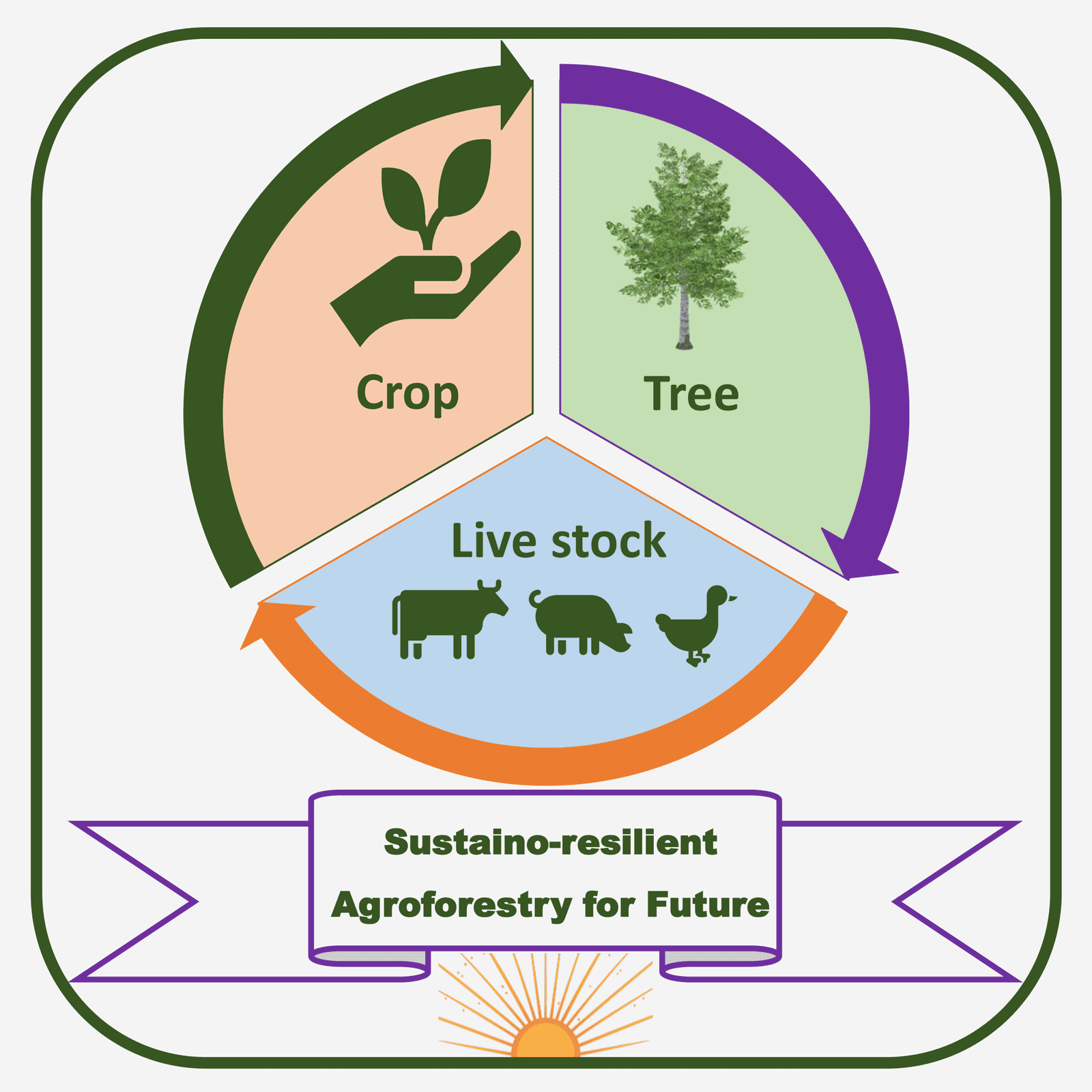
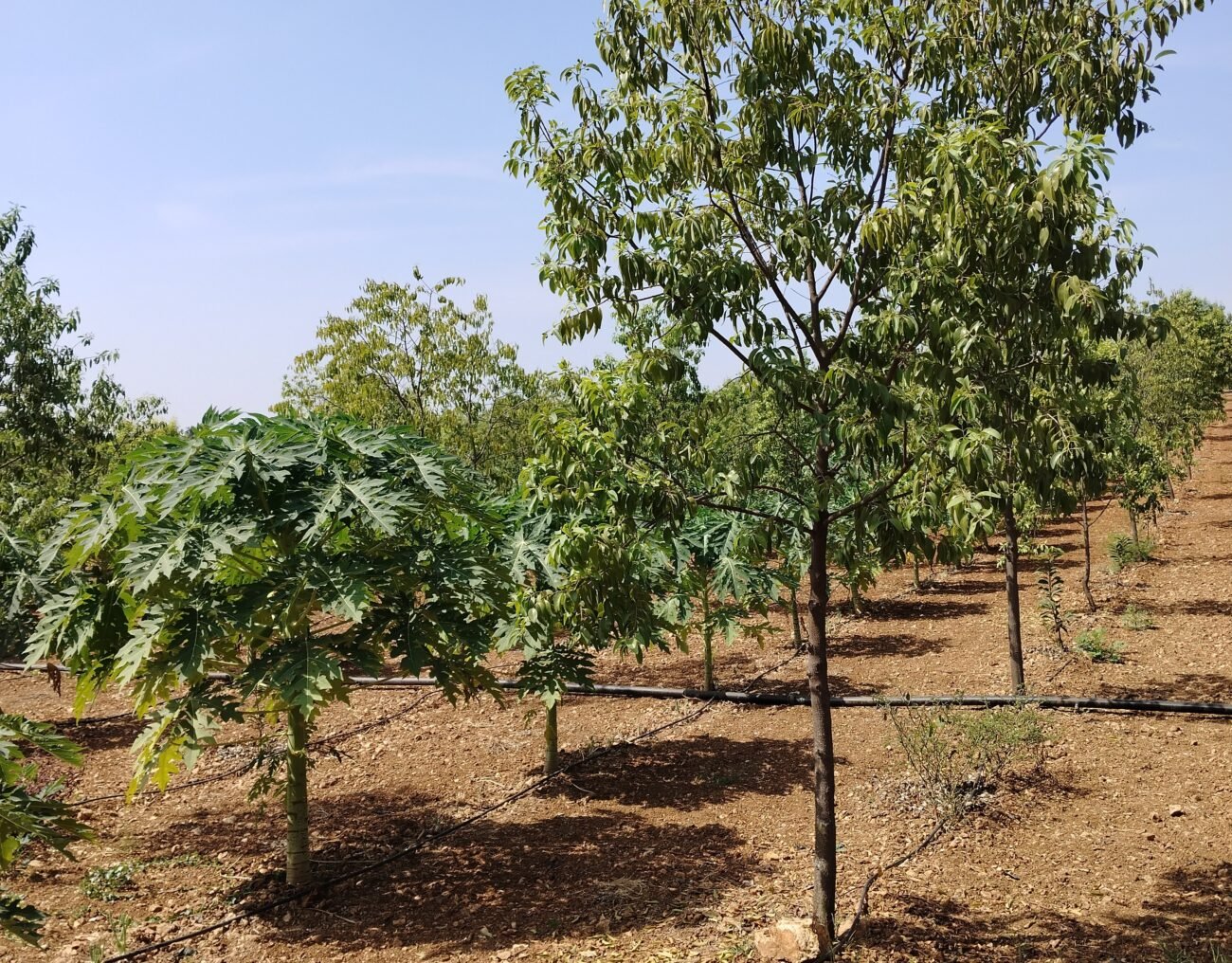
Agroforestry is an agricultural and forestry system, where trees are integrated with agriculture/horticulture crops with or without animal components. This comprises trees on farms and in agricultural landscapes, and farming in forests.
Being an Assistant Professor who teaches agroforestry, I feel very happy to see the growing interest and expansion of agroforestry at a time when agriculture is facing many challenges, such as soil degradation, water stress, climate uncertainty, and declining yields. Both the State and Central Governments are also expressing keen interest and are coming up with policies to promote tree cultivation on agricultural land, along with animal component.

