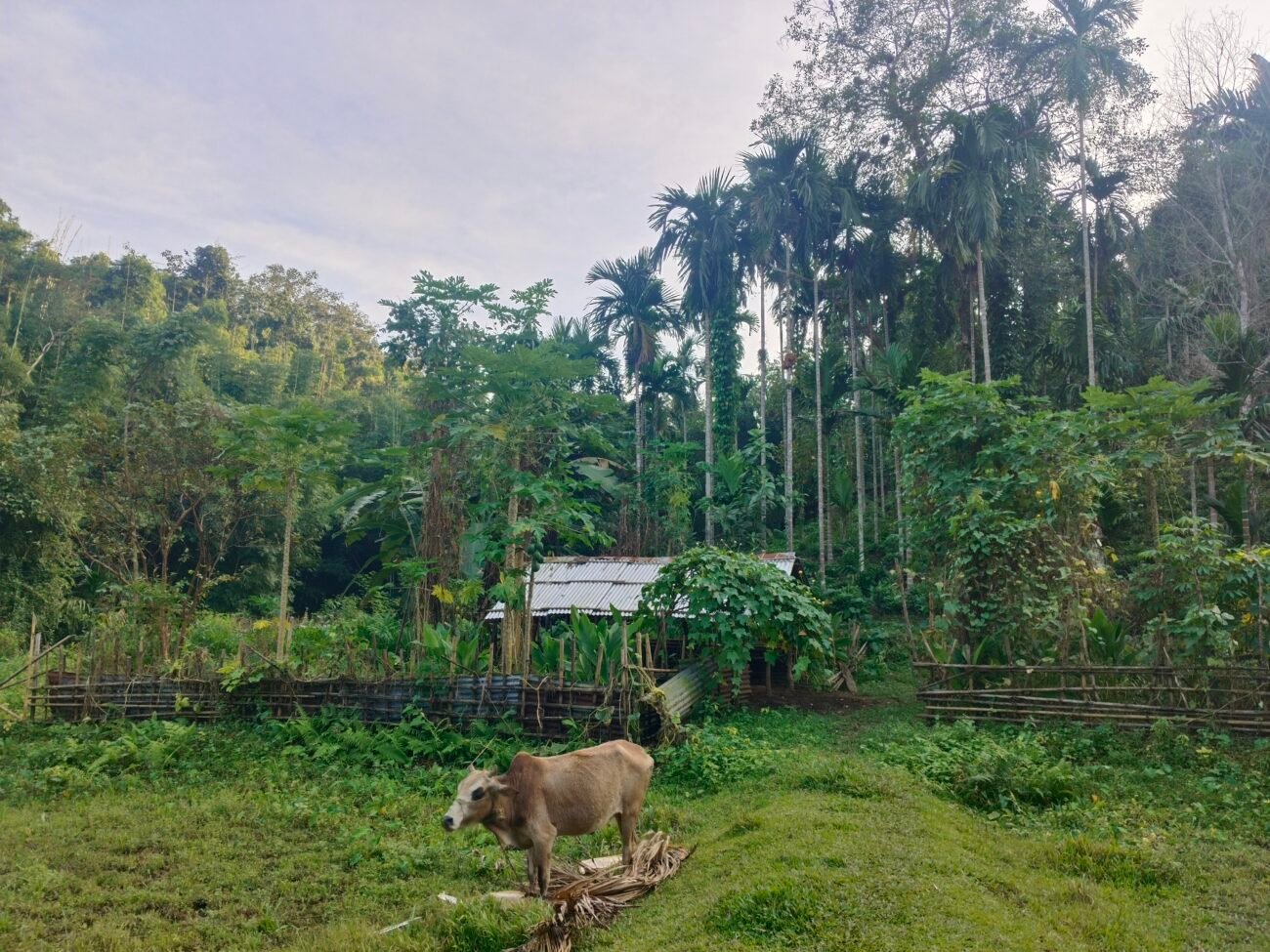
Arecanut (Areca catechu), known as betel nut, is an important plantation crop in Meghalaya. Meghalaya holds the fifth position in the production of areca nuts, is the 3.3 % of total areca production in India. It is grown in the East Khasi hills, Jaintia hills, West Garo hills, and East Garo hills of Meghalaya. The nut is mainly used for chewing products. Kahikuchi is the most important variety of Areca nut grown in Meghalaya, and DawkiKwai is extensively grown in East Khasi hills and Jaintia hills.
Areca nut is consumed in fresh, cured, and dry forms along with betel leaves and lime. However, the arecanut palm produces several other by-products such as leaves, husks, and leaf sheaths. These residues are often discarded as agricultural waste. With increasing awareness about sustainable products and eco-friendly alternatives, these residues are gaining economic importance. Converting arecanut palm residues into value-added products can create significant rural entrepreneurship opportunities while reducing environmental waste.
Find our recent blog: How to Manage Irrigation in Arecanut during Peak Summer
Availability of Raw Material
Arecanut plantations produce a considerable amount of leaf sheath residues every year. On average, an individual arecanut palm produces about 5–6 leaf sheaths per year after four years of planting. These leaf sheaths naturally fall from the tree and can be collected easily without harming the plant. In arecanut-growing regions such as Meghalaya, this provides a continuous and low-cost source of raw material for small-scale industries.
Rural Entrepreneurship Opportunities from Arecanut Palm
In arecanut-growing regions such as Meghalaya, there is a continuous and low-cost source of raw material for small-scale industries for areca palm residue products such as areca palm sheath plate, cups, and bowls, palm leather, decorative items, etc.
Areca Leaf Plate
Areca leaf plates are biodegradable, use-and-throw tableware manufactured from areca leaf sheaths.
Global Demand for Areca Leaf Plates
The demand for biodegradable tableware has increased globally due to restrictions on plastic products and rising environmental awareness. Areca leaf plates are chemical-free, biodegradable, and safe for food use, which makes them highly attractive in international markets. Therefore, there is a high demand for the export of areca leaf plates in the USA, the Netherlands, Germany, Spain and United Kingdom.
This growing global demand provides an excellent opportunity for rural entrepreneurs to enter eco-friendly product markets.
Establishing a Micro-Scale Areca Leaf Plate Manufacturing Unit
A micro-scale areca leaf plate manufacturing unit requires moderate capital investment and basic infrastructure. The unit is usually established near arecanut plantations to ensure easy access to raw materials.
Estimated Cost
| Component | Approximate Cost |
| Borewell and pumpset | ₹80,000 |
| Two die pressing machines | ₹40,000 |
| Processing shed construction | ₹50,000 |
| Washing gun with 2 HP motor | | ₹20,000–₹30,000 |
| Water storage tank (Sintex) | ₹10,000–₹15,000 |
Total Estimated Investment:₹2–3 lakhs (for a small micro-unit)
For larger semi-automatic units, the investment may range between ₹4–8 lakhs, depending on machinery capacity and infrastructure.
Raw Materials Required
The production of areca leaf plates requires very few raw materials: Fallen areca leaf sheaths (₹10–20 per kg), sandpaper for finishing, water for cleaning, and bundles of dried sheaths for efficient processing
An acre of arecanut plantation can produce approximately 640 leaf sheaths annually, ensuring a steady supply of raw material.
Site and Space Requirements
A small processing unit can be established in a 100–300 square feet shaded area near arecanut plantations. Basic requirements include: Electricity supply (single or three phase, 220–440 V), water supply for cleaning, proper ventilation for drying, and basic flooring for hygienic processing.
Such small-scale units can employ 2–5 workers and produce 1,000–3,000 plates per day.
Manufacturing Process of Areca Leaf Plates
The production process is simple, chemical-free, and environmentally friendly.
- Collection of Leaf Sheaths: Naturally fallen leaf sheaths are collected from plantations and separated from leaves.
- Drying:The sheaths are sun-dried to remove excess moisture. This step is especially important during the rainy season.
- Cleaning: The dried sheaths are soaked in water for about 20 minutes and scrubbed with a brush to remove dust, sand, and fungal spores.
- Heating the Machine: The areca leaf plate machine is preheated using thermostat-controlled heating coils. Click here to buy
- Pressing and Cutting:The cleaned sheath is placed between heated dies. The machine presses the sheath using heat and pressure to form the desired plate shape. Built-in blades trim the edges simultaneously.
- Grading and Finishing: The plates are manually graded, and edges are smoothened using sandpaper.
- Drying and Packaging: The plates are dried to remove moisture and sometimes cured using UV light to prevent microbial growth before packaging.
Importantly, no chemicals are used in this process, making the plates fully biodegradable and safe for food use.
Production Capacity and Revenue
A small manufacturing unit can produce 1,000–3,000 plates per day, depending on machine capacity and labor availability.
Estimated Income
| Component | Approximate Cost |
| Plate selling price | ₹2–₹5 per plate |
| Daily production | 1,000–3,000 plates |
| Daily revenue | ₹2,000–₹15,000 |
Net profit margins typically range between 20–25%, and the investment can usually be recovered within 3–5 years.
Additional Opportunities from Arecanut Residues
Apart from leaf plate manufacturing, several other entrepreneurial opportunities exist using arecanut residues.
Palm leather
Palm leather is an alternative plant-based leather produced from areca palm sheaths. It is biodegradable, free from harmful/ toxic chemicals, and no animals are harmed in its production process. The production of a square meter of animal-based leather requires 23,000-24,000 litres of water and results in 17 kg of carbon emissions. This vegan/ palm leather demands only 500-600 litres of water.
Vegan Leather: a case study from Karnataka: Suresh, a 50-year-old Arecanut farmer from a small village, Sringeri, Karnataka. He is also a founder of Bhoomi Agri Venture, a manufacturer, exporter, and supplier of Areca Palm Leaf Plates, biodegradable tableware. He received a patent for the manufacturing of biodegradable, toxic-free, alternative to animal leather, called Vegan leather. He is involved in the production of various areca palm-based products such as footwear, interior decoration, fashionable bags, book cover and pen stands. He also connected with SHGs, trained women in extracting the fibre, and sewing different products.
Areca Husk Fiber and Textiles
Areca husks can be processed to extract fibers that are used in textile production. These fibers can be blended with cotton to produce eco-friendly yarn and fabrics used in bags, mats, upholstery materials, and handicrafts.
Natural dye (Chogaru)
Chogaru is a concentrated red liquid obtained during the processing of the red areca nut variety, which is mainly cultivated in the Malnad region of Karnataka. It is rich in tannins and yields shades ranging from maroon and garnet to brown. It can be used to dye natural fibres like cotton, silk, and wool.
Areca husk briquettes
Areca husk briquettes are eco-friendly, high-density fuel made from processed areca palm sheaths or leaves (often mixed with binding agents like sawdust) that offer a sustainable alternative to sawdust/coal, with high calorific value and low ash residue. These 90mm cylindrical, low-sulfur briquettes are suitable for domestic cooking, boilers, and industrial furnaces.
A study from Karnataka revealed that the areca husk briquettes made out of 100 % areca husk contained ash 8%, moisture content 4%, volatile matter 85%, and fixed carbon 3%. It was also found that the calorific value of the sawdust briquette was in the range of 16000-18000 J/g, which was less than that of 100% the areca husk briquette.
Organic manure
Areca leaves and husks, once burned as waste, have found new life as organic manure. Mixing of dried leaves and husk with cow dung will yield a slurry, and the addition of red earthworms (Eisenia foetida) aids production of vermicompost.
Government Support and Subsidies
Several government schemes support rural agro-processing enterprises.
Important Schemes
- PMEGP (Prime Minister’s Employment Generation Programme): Provides 25–35% subsidy on project costs up to ₹50 lakhs.
- SMAM (Sub-Mission on Agricultural Mechanization): Provides 40–50% subsidy on agro-processing machinery.
- Special Northeast Programs: In northeastern states, subsidies may reach 50–80% under various regional development schemes. These financial supports significantly reduce the cost burden for rural entrepreneurs.
Market Potential
With increasing global demand for sustainable and biodegradable products, areca-based industries have strong growth potential. Restaurants, caterers, and event organizers are increasingly replacing plastic plates with natural alternatives. Additionally, eco-friendly textile markets are expanding rapidly.
The availability of abundant raw materials in Meghalaya, combined with government support and growing market demand, creates a favorable environment for developing rural enterprises based on arecanut residues.
Conclusion
Arecanut palm residues offer immense opportunities for rural entrepreneurship and sustainable livelihood generation in Meghalaya. By transforming agricultural waste such as leaf sheaths and husks into value-added products like biodegradable plates and eco-friendly textiles, rural communities can generate income, reduce environmental pollution, and strengthen local economies. Promoting such waste-to-wealth initiatives in arecanut in Meghalaya can play a vital role in supporting sustainable agriculture and rural development.
How to Manage Irrigation in Arecanut during Peak Summer

