- Introduction
- The Ecological Landscape of Garo Hills
- Why Wild Edible Plants Matter?
- Diversity of Wild Edible Plants Recorded
- Traditional Knowledge and Harvesting Practices
- Nutritional and Medicinal Value
- Wild Edible Plants and Women’s Knowledge
- Market Potential and Livelihood Opportunities
- Threats to the Diversity of WEPs
- Conservation Strategies Suggested by the Research
- Wild Edible Plants and Climate-Resilient Food Systems
- Future Research Directions
- Conclusion
Introduction
Meghalaya is the world’s wettest place, receiving the highest rainfall in India. Hence, it supports diverse flora and fauna, and is one of the biodiversity hotspots of India. In Meghalaya, the Garo Hills are one of the richest biodiversity regions in Northeast India. Covered with dense forests, rolling hills, sacred groves, rivers, and shifting cultivation landscapes, the region supports a remarkable diversity of wild plant species. For generations, indigenous communities, especially the Garo people, have depended on wild edible plants (WEPs) for food, nutrition, medicine, and cultural practices.
Our latest research, entitled “Ethnobotanical Knowledge of Wild Edible Plants for Empowering Food and Nutritional Security in the Garo Hills, India,” documents and analyzes the diversity, traditional knowledge, and nutritional significance of WEPs in the Garo Hills. This blog presents key findings from our research published in the Journal of Ethnobiology and Ethnomedicine in simple language, highlighting why these wild edible plants matter today more than ever.
The Ecological Landscape of Garo Hills
Garo Hills is part of the Indo-Burma biodiversity hotspot, experiences high rainfall and a humid subtropical climate, and has diverse soil types. Such ecological conditions support tropical evergreen forests, semi-evergreen forests, bamboo brakes, and agroforestry systems.

One of the most important ecological zones in the region is the Nokrek Biosphere Reserve, known for its rich flora and endemic species. The reserve harbours diverse Citrus species; hence, the first Citrus Gene Sanctuary was established in 1981 to conserve the Citrus genetic resources. Forests around Nokrek and the surrounding villages serve as natural reservoirs of WEPs.
However, population explosion, land-use change, and market-driven agriculture are gradually affecting traditional plant diversity.
Why Wild Edible Plants Matter?
Wild edible plants (WEPs) are naturally growing plant species that are consumed as vegetables, fruits, tubers, spices, beverages, or condiments. They are not cultivated in conventional farms but are collected from forests, fallow lands, riverbanks, and jhum fields.
Learn more from our earlier research works:
- Underutilized edible fruit species of the Indo-Gangetic Plains: A systematic review for food security and land degradation neutrality
- Threatened and Near Threatened Underutilized Edible Fruit Species of Southern India for Food Security and Diversifying Agroecology
Our research highlights several important roles of wild edible plants (WEPs):
- Nutritional Security: Many WEPs are rich in vitamins, minerals, antioxidants, and dietary fiber. During lean agricultural seasons, they provide essential nutrients.
- Food Security: In remote villages, wild plants act as “food safety nets,” especially during crop failure or economic hardship.
- Cultural Identity: Traditional dishes prepared from WEPs are part of festivals, rituals, and daily life in Garo society.
- Climate Resilience: WEPs are often more resistant to drought, pests, and climate variability than cultivated crops.
Diversity of Wild Edible Plants Recorded
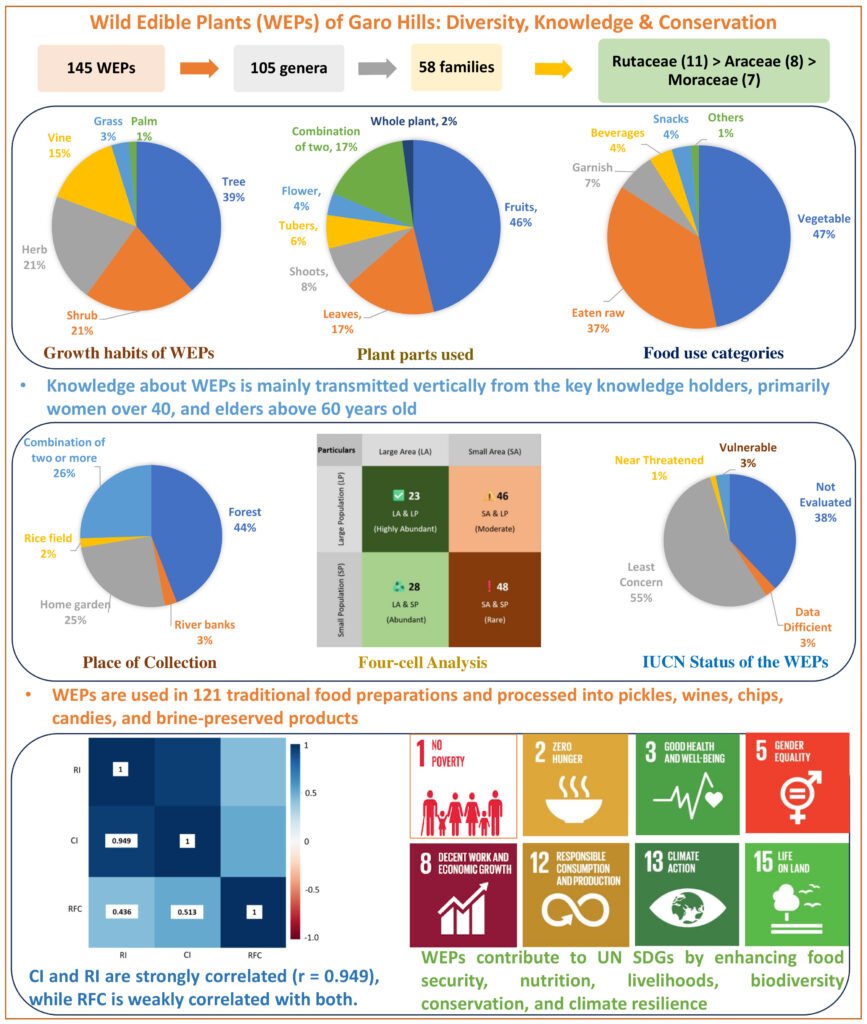
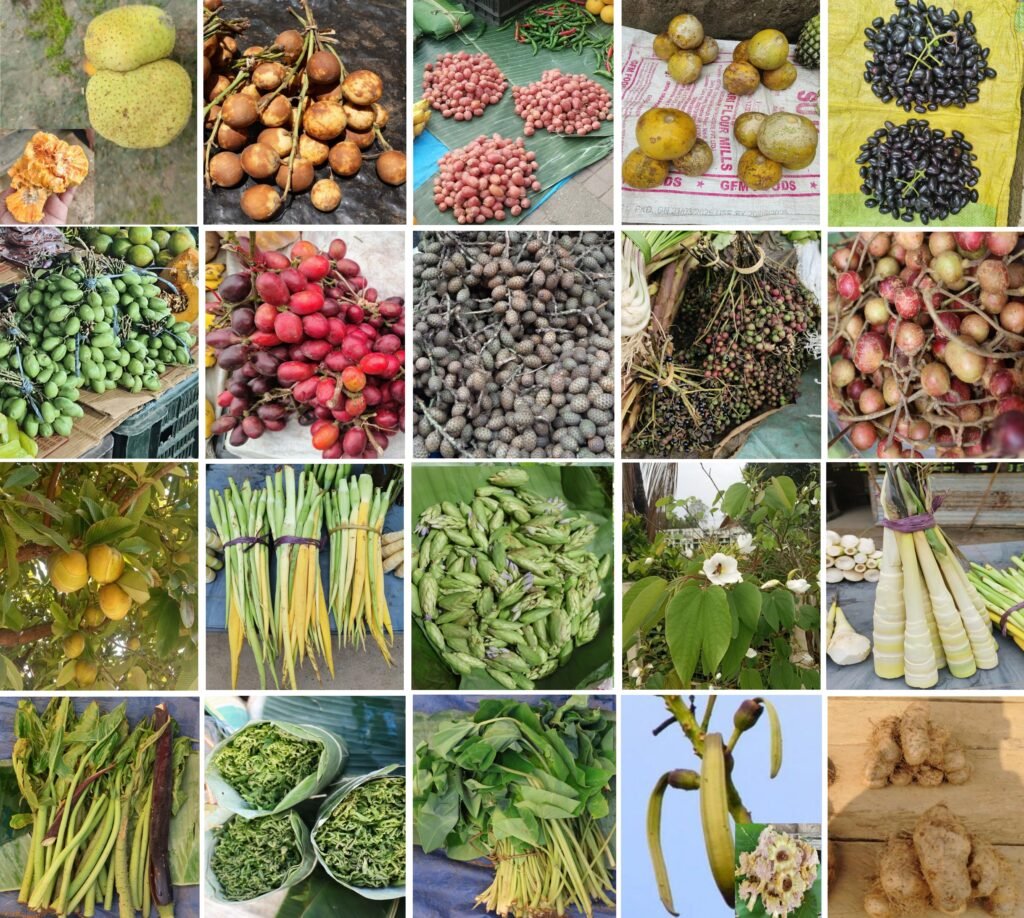
Our latest field surveys across 42 villages in all five districts of Garo Hills recorded a significant (145) number of wild edible plant species belonging to 105 Genera and 58 families.
Major Categories Identified:
- Wild Fruits: Forest fruits are consumed fresh or processed. Many are rich in vitamin C and antioxidants.
- Leafy Vegetables: Young leaves and shoots of several forest species are commonly consumed. Ferns, such as Diplazium esculentum, are not typically considered vegetables. Leaves of wild taro and other aroids are widely used after proper cooking.
- Bamboo Shoots: Tender bamboo shoots are widely consumed fresh or fermented. They are nutritionally rich and culturally significant.
- Tubers and Rhizomes: Wild yams and other underground storage organs are important fallback foods during periods of scarcity.
- Flowers: Flowers of Oroxylum indica, Moringa oliefera, Rhus semialata, and Xanthoxylum armatum are utilized.
Traditional Knowledge and Harvesting Practices
Indigenous knowledge plays an important role in identifying, collecting, and preparing WEPs.
Knowledge Transmission: Traditional knowledge is passed orally from elders to younger generations. Women are key knowledge transmitters as they know detailed knowledge about edible plants and cooking methods.
Seasonal Calendar: Different species are available in different seasons:
- Monsoon: Leafy vegetables, certain fruits like blood fruit, Burmese grapes, monkey jack, jackfruits, etc., and mushrooms are available in the monsoon or rainy season.
- Winter: Certain wild edible fruits like Ber, Citrus, amla etc., and some tubers are available in winter.
- Summer: Wild berries and many wild edible fruits are common in summer.
Sustainable Harvesting by following selective harvesting methods:
- Collection of young leaves, leaving the stem and root intact to soil.
- Avoiding overharvesting of fruits from fruit trees
- Protecting sacred groves
However, unsustainable developmental activities and deforestation are affecting this traditional system.
Nutritional and Medicinal Value
The study reveals that many WEPs have high nutritional value. Laboratory analysis and literature review suggest:
- Leafy greens are rich in Iron content
- Bamboo shoots are a storehouse of Ca
- Wild edible fruits are rich in antioxidants
- Fiber-rich tubers
Some plants also have medicinal properties:
- Used for treating digestive problems
- Boosting immunity
- Managing inflammation
Thus, WEPs are not just food; they are functional foods.
Wild Edible Plants and Women’s Knowledge
In Garo Hills, women are key custodians of wild plant knowledge. They collect, process, cook, and preserve many WEP species. They play a critical role in:
- Identifying edible and toxic species
- Maintaining homestead gardens for fulfilling household requirements
- Transfer of traditional knowledge to the younger generations
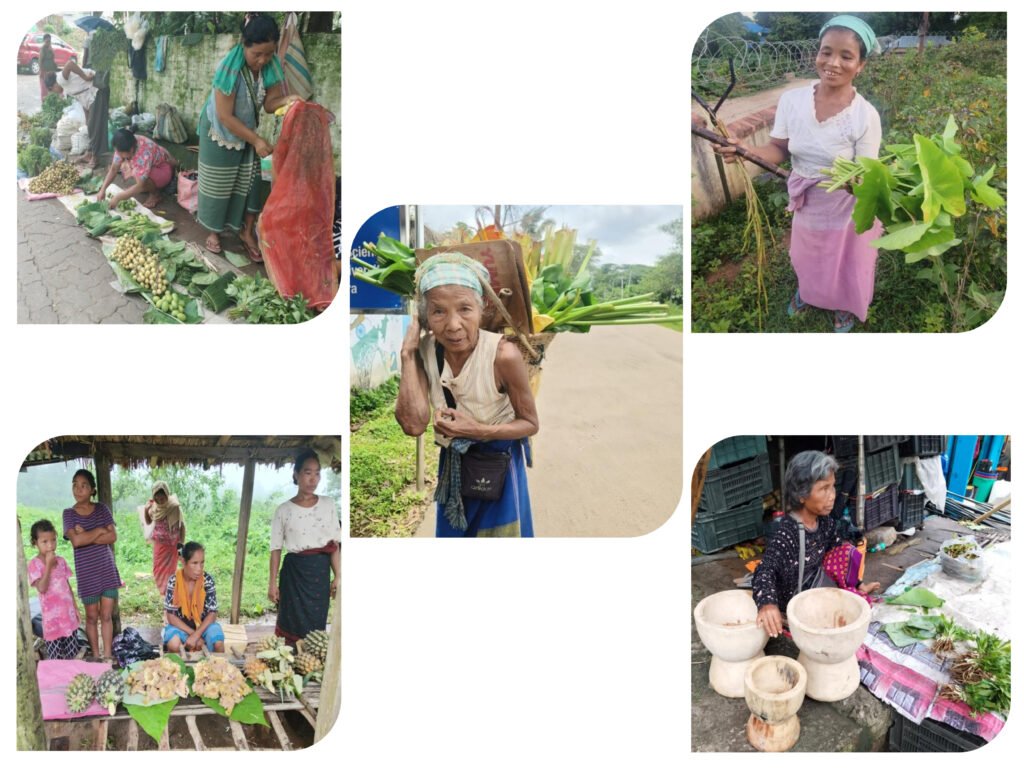
However, migration and modernization are reducing the interest in younger generations in the transfer of knowledge.
Empowering women through documentation, value addition, and local market access can strengthen both livelihoods and conservation.
Market Potential and Livelihood Opportunities
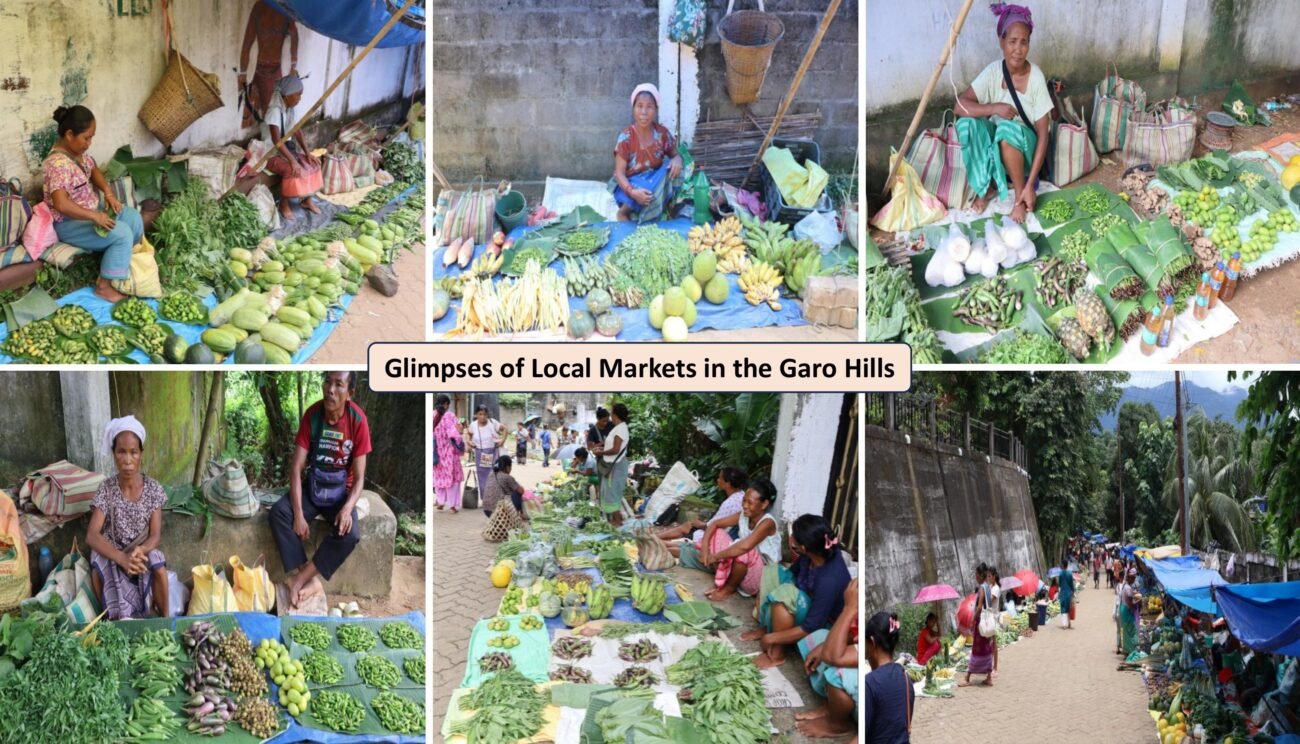
Many WEPs are now sold in local markets across Meghalaya. Bamboo shoots, mushrooms, leafy vegetables, and wild fruits provide seasonal income.
Opportunities Identified:
- Development of Value-added products, such as pickles, dried leaves, fermented shoots, juices, jelly, and jams.
- Nutritional branding and attractive packaging
- Linking to eco-tourism
- Promoting traditional cuisine
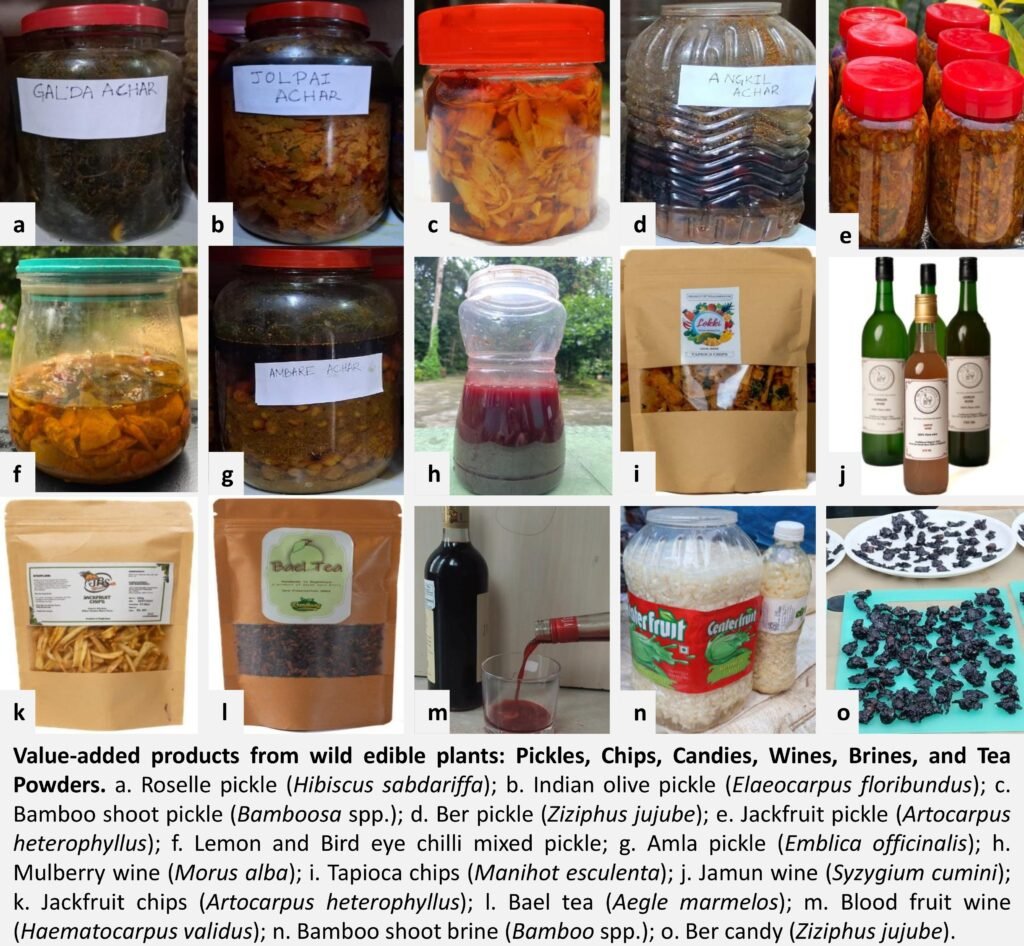
With proper training and policy support, WEPs can contribute to providing rural employment.
Threats to the Diversity of WEPs
Despite their importance, WEPs face many challenges:
- Deforestation: Agriculture expansion and infrastructure development reduce forest cover.
- Shifting Cultivation Changes: Shorter fallow cycles hinder the regeneration of useful tree species.
- Market-Oriented Farming: Practice of commercial arecanut monocropping.
- Knowledge Erosion: Younger generations are showing declining interest in traditional food systems.
- Climate Change: Changing rainfall patterns and temperature affect seasonal availability.
Conservation Strategies Suggested by the Research
The study recommends a multidisciplinary approach:
- Community-centric Conservation: Strengthening local forest management systems and sacred grove protection.
- Documentation of Traditional Knowledge: Recording local names, uses, preparation methods, and seasonal calendars.
- Integration with Agroforestry: Promoting wild edible species in home gardens and agroforestry systems.
- Nutritional Profiling: Scientific validation of nutritional value to promote wider acceptance.
- Sustainable Market Linkages: Developing Value Chains without overexploitation.
Wild Edible Plants and Climate-Resilient Food Systems
As climate change threatens conventional agriculture, wild edible plants offer an alternative. They are:
- Naturally adapted to local ecosystems
- Less dependent on chemical inputs
- Capable of growing in marginal lands
Incorporating wild species into farming systems can enhance resilience and biodiversity conservation.
Policy Implications
Wild edible plants are often ignored in mainstream agricultural and forest policies. However, our research suggests:
- Recognizing WEPs in nutrition missions
- Including them in biodiversity registers
- Supporting indigenous food systems
- Promoting research funding
Policies should move beyond timber-focused forestry and support non-timber forest resources.
Future Research Directions
Although our study provides updated documentation, several research gaps remain:
- Detailed nutritional analysis of lesser-known species
- Long-term ecological monitoring
- Ethnobotanical comparison across districts
- Impact of climate change on phenology
Further interdisciplinary research is needed to integrate ecology, nutrition, anthropology, and climate science.
Conclusion
Wild edible plants of Garo Hills are more than just forest foods; they represent biodiversity, culture, resilience, and sustainability. Our latest research shows that these plants continue to play a vital role in food and nutritional security, especially in rural communities. However, rapid socio-economic and environmental changes pose a threat to both plant diversity and traditional knowledge systems. Conservation efforts must combine scientific research with community participation. If preserved and promoted wisely, wild edible plants can make significant contributions to sustainable development, climate resilience, and improved livelihoods in the Garo Hills and beyond.
Final Thought
In a world facing food insecurity and climate uncertainty, perhaps the answers lie not only in industrial agriculture, but also in the forests, traditions, and knowledge systems that communities of the Garo Hills have protected for generations.
Explore the full research publication and detailed results: Ethnobotanical Knowledge of Wild Edible Plants for Empowering Food and Nutritional Security in the Garo Hills, India
Fostering Fifteen Forgotten Fruits: Know the Stories From Meghalaya

