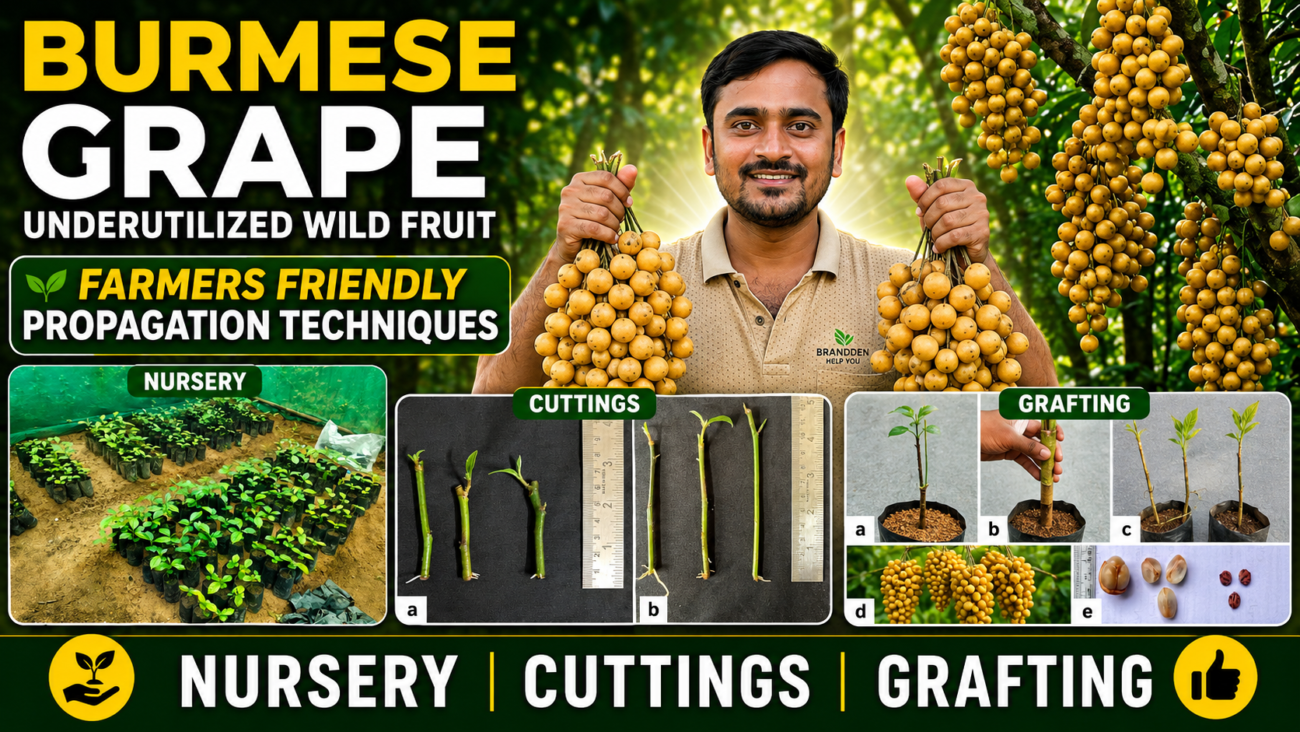
Have you ever seen a tree bearing golden-yellow-colored fruit berries directly on its branches and trunk? If yes, you have probably seen Burmese grape (Baccaurea ramiflora Lour.), locally known as Latkan or Lotko, an underutilized fruit species belonging to the family Phyllanthaceae.
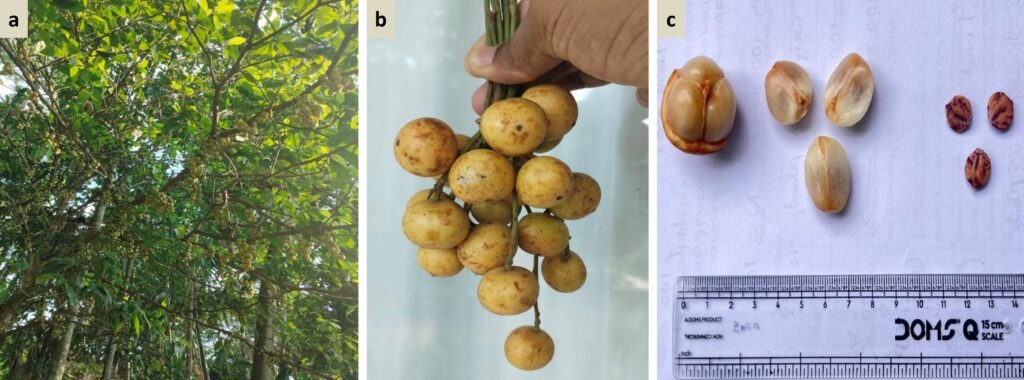
This is an underutilized fruit tree distributed in South and Southeast Asia, including India, Bangladesh, China, Myanmar, Thailand, and Malaysia. In India, it naturally grows in home gardens, traditional agroforestry systems, and forest margins of the northeastern states and the Andaman and Nicobar Islands. These fruits are consumed raw and also processed into juices, jams, preserves, wines, and fermented beverages. Burmese grape is valued for both its nutritional and medicinal properties. The fruit is rich in vitamins, minerals, antioxidants, and other phytochemicals. Though it has tremendous health-promoting potential, this fruit remains underutilized. However, its adaptability to humid tropical conditions and multiple uses has led researchers and farmers to now recognize the Burmese grape as a promising climate-resilient fruit crop for the future.
The production of early-fruiting, quality planting material is the major challenge for this species. Although seeds have a high germination rate, seed propagation results in a long juvenile period (5–7 years), high genetic variability, and an uncertain male-to-female ratio. The absence of standardized vegetative propagation techniques, such as cuttings and grafting, further limits the production of true-to-type, early-bearing planting material and the establishment of productive orchards.
In this article, we explain simple, research-based propagation techniques that every farmer and nursery owner can easily follow.
Note: For comprehensive information on Burmese grape propagation and nursery management, the PDF download link will be shared shortly.
Why is it called Baccaurea ramiflora?
The scientific name itself tells an interesting story.
- Bacca means berry.
- Aurea means golden.
Together, Baccaurea means golden berry, referring to its attractive yellow fruits.
- Rami means branches.
- Flora means flowers.
Together, ramiflora means flowers are produced directly on the branches and trunk.
This makes the tree highly attractive during the fruiting season. The tree grows up to 10 metres tall and prefers warm, humid conditions
Why Should We Grow Burmese Grape?
This fruit offers several advantages.
Delicious fruits
The fruits are sweet with a pleasant acidic flavour and are mostly eaten fresh.
Rich in nutrients
Burmese grape is recognized for its impressive nutritional composition. The fruit pulp contains about 5.5% protein and is particularly rich in vitamin C (178 mg/100 g). It also provides valuable minerals, including 169 mg calcium, 137 mg potassium, 177 mg phosphorus, and 5.34 mg iron per 100 g, making it a nutritious addition to the diet (Hussain et al., 2017).
Medicinal importance
Burmese grape has been traditionally used as a medicinal plant in India, China, and Thailand. Different parts of the plant are used to relieve constipation, reduce inflammation, alleviate pain, and treat wounds and skin disorders. Recent studies also suggest that its bioactive compounds possess promising medicinal properties. In addition to its health benefits, the nutrient-rich fruit can be processed into antioxidant-rich products such as juice and wine, making it a valuable functional food.
Research has shown that different parts of the plant possess:
- Antioxidant activity
- Anti-inflammatory properties
- Antidiabetic potential
- Antimicrobial activity
Multiple uses
- Wood is used for furniture,
- Bark fibre is used for ropes,
- Seeds can produce biochar,
- Fruits are processed into juices, jelly, jams, wines, and fermented beverages.
It is a promising fruit crop for agroforestry systems, home gardens, climate-resilient farming, nutrition security, and value addition industries. The tree also supports biodiversity and grows well under partially shaded conditions, making it suitable for mixed farming systems.
One Important Fact Every Farmer Should Know
Burmese grape is a dioecious species.
This means:
- One tree produces only male flowers
- Another tree produces only female flowers
Only female trees bear fruit.
A male tree never produces fruit, even after many years.
Unfortunately, you cannot identify male and female seedlings during the juvenile stage.
Therefore, if you raise plants from seed, some of them will eventually become male trees, reducing orchard productivity.
This is why vegetative propagation is extremely important.
Propagation Methods
Method 1: Propagation Through Seeds
For farmers, seed propagation is still the simplest method.
Step 1. Collect fully ripe fruits
Choose:
- healthy trees
- disease-free fruits
- fully mature yellow fruits
Avoid immature fruits.
Step 2. Remove the pulp
Separate seeds from the pulp and wash them thoroughly.
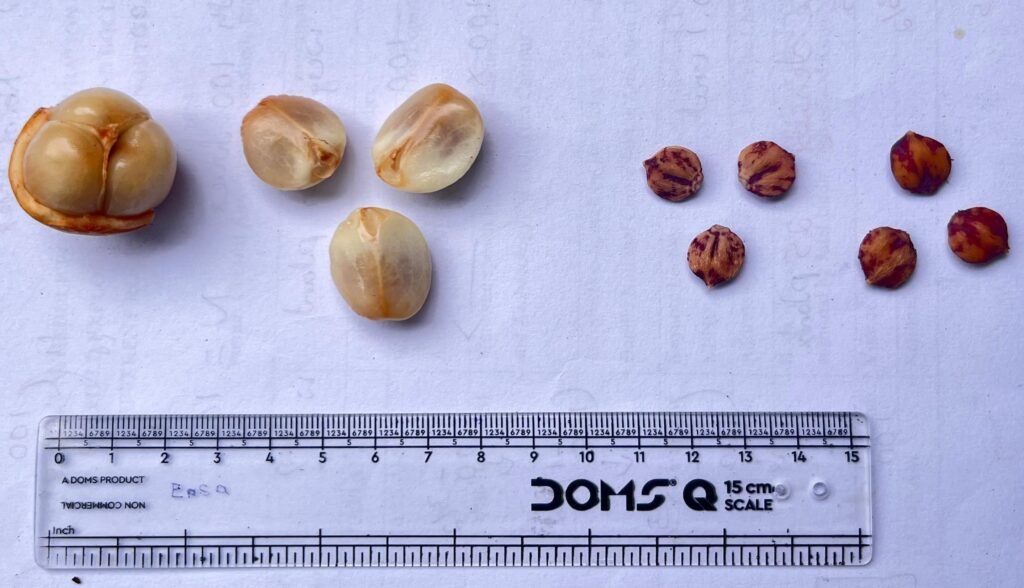
Step 3. Never store seeds for long
This is the most important point.
Burmese grape seeds are recalcitrant.
That means they:
- lose moisture quickly
- cannot tolerate drying
- lose germination rapidly
Ideally, sow them within 7–15 days after extraction.
Fresh seeds always perform better.
Step 4. Soak seeds in water
Our research found that the simplest and most economical treatment is:
Soak seeds in clean water for 12 to 24 hours.
No expensive chemicals are required.
This treatment improves germination considerably.
Step 5. Sow immediately
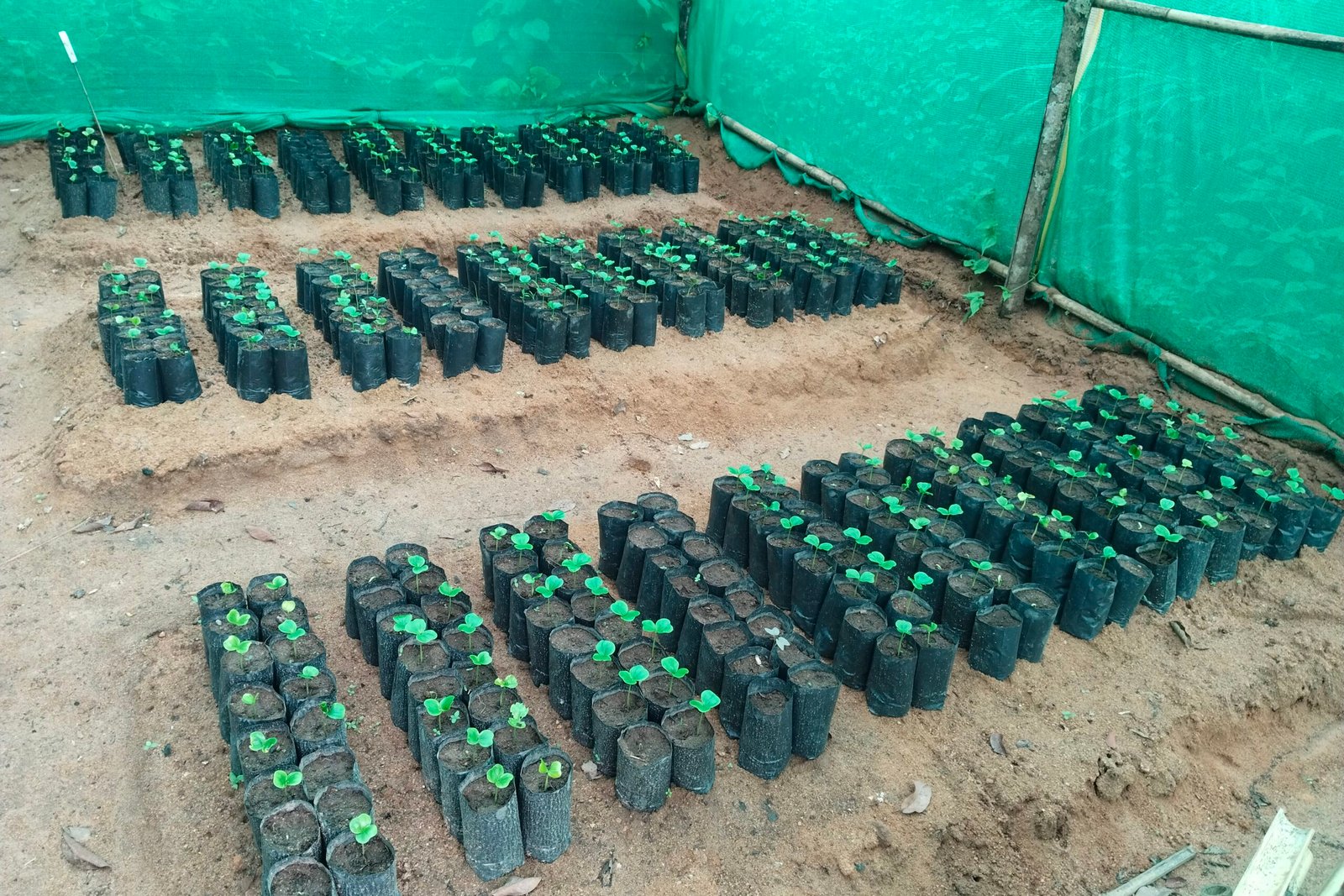
Sow seeds about
- 2–3 cm deep
- In moist nursery beds or polybags
Maintain regular moisture and do not allow the soil to dry.
Best Potting Mixture
Our nursery observations showed excellent seedling growth in:
Sand: Soil: Vermicompost = 2: 1: 1
This mixture provides good drainage, enough nutrients, better root development, and vigorous seedlings.
Method 2: Propagation Through Softwood Cuttings
This is the best method when you want true-to-type female plants.
Which cutting is best?
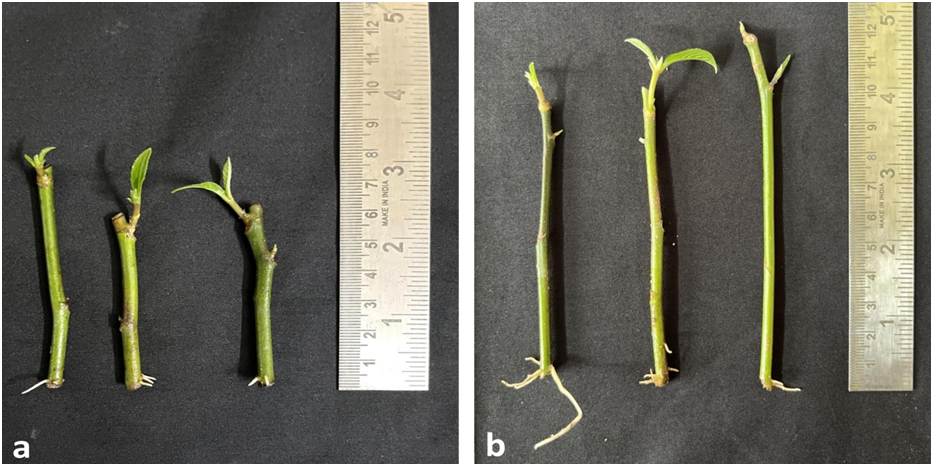
Research showed that three-node softwood cuttings perform better than one- and two-node cuttings.
Plant Growth Regulators
Better rooting was observed with IBA 1000 ppm and NAA 500 ppm.
These hormones stimulate root formation.
Best Rooting Medium
Our research found that coarse sand is the best medium for root initiation.
Sand provides excellent aeration, proper drainage, and faster root development.
Keep cuttings in coarse sand for about one month.
After rooting, shift them to polybags.
Best Potting Mixture After Rooting
Once roots develop, transplant into
Sand : Soil : Vermicompost = 2 : 1 : 1
This promotes better shoot growth, healthy roots, and improved seedling vigour.
Method 3: Hardwood Cuttings
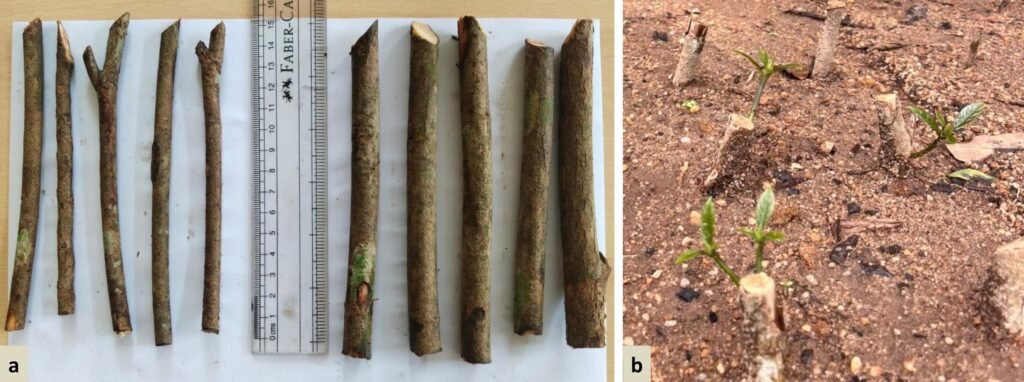
Hardwood cuttings can also be used.
One interesting observation from our study was:
Thicker hardwood cuttings rooted better than thinner ones.
So always choose mature, healthy branches.
Method 4: Cleft Grafting
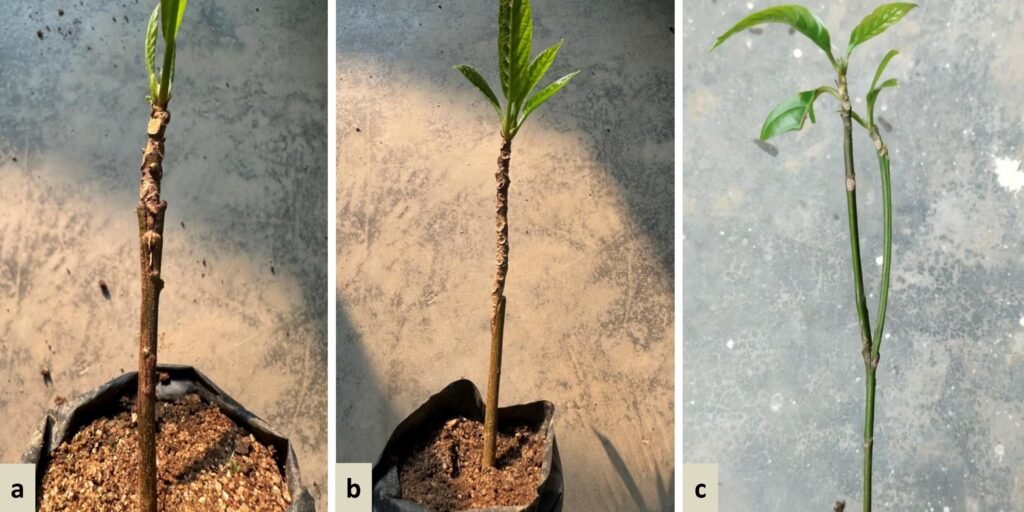
If elite female trees are available, grafting is one of the best options.
We compared several methods.
- Cleft grafting
- Whip and tongue grafting
- Side veneer grafting
Among them,
Cleft grafting gave the highest success.
Side veneer grafting also performed well.
Advantages include early fruiting, true-to-type plants, assured female trees, and uniform orchards.
Method 5: Air Layering
Air layering is another promising technique.
The procedure is simple.
- Select a healthy branch.
- Remove a ring of bark.
- Apply rooting hormone.
- Fill a layering cup with moist rooting medium.
If layering cups are unavailable, simply use a polythene cover.
Which Medium Works Best?
The sand + cocopeat (1:1) helps retain moisture while allowing aeration, resulting in a high success rate.
Moisture is Very Important
Never allow the rooting medium to dry. If necessary, add a little water periodically.
Nursery Management Tips
For better success,
- Maintain partial shade.
- Water regularly.
- Avoid waterlogging.
- Remove diseased cuttings immediately.
- Use healthy mother plants.
- Handle seedlings carefully while transplanting.
Common Mistakes Growers Should Avoid
- Using old dried seeds
- Allowing seeds to dry in the sun
- Planting without water soaking
- Using heavy clay soil for rooting
- Allowing rooting media to dry
- Using unhealthy mother plants
Common Problems During Nursery Raising
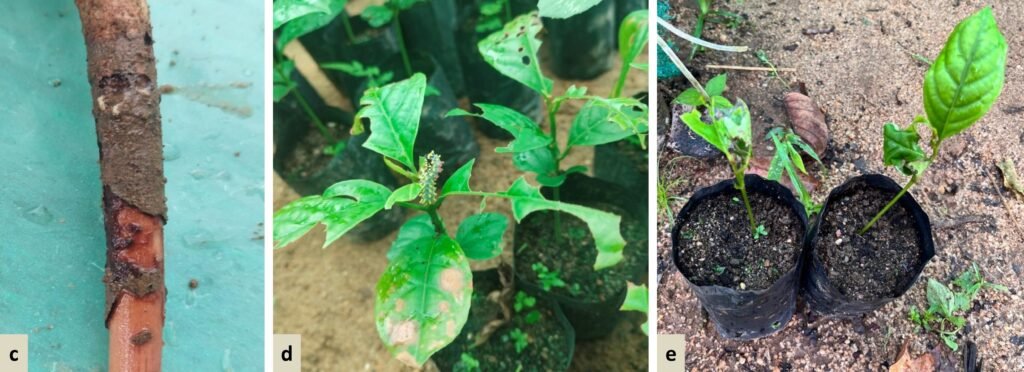
During propagation, termites may damage stem cuttings, while caterpillars can feed on young leaves. Regular nursery inspection, clean rooting media, and good sanitation help prevent termite attack. Remove affected cuttings immediately and use recommended termite control measures if needed. Caterpillars can be managed by hand-picking or spraying a neem-based biopesticide. Timely pest management ensures healthy and vigorous Burmese grape seedlings.
Final Message to Growers
Burmese grape is one of Northeast India’s hidden treasures. With proper propagation techniques, farmers can establish productive orchards and conserve this valuable native fruit for future generations.
If you are a beginner, start with fresh seeds soaked in water for 12 to 24 hours. For commercial orchards, cleft grafting or softwood cuttings treated with IBA or NAA are better choices because they produce uniform, true-to-type plants and help avoid the problem of unwanted male trees.
As demand for nutritious and climate-resilient fruits continues to grow, Burmese grape has excellent potential to become an important income-generating crop for farmers across suitable tropical and subtropical regions.
Watch the video to explore the Burmese grape in detail.
Explore more wild fruits
How to Propagate Blood Fruit using Seed and Softwood Cuttings: Insights from Research

