Whenever I walk through the forests of the Garo Hills in Meghalaya, the luxuriant growth and rich diversity of plant species fascinate me. As a forester, I am particularly interested in plants belonging to the Rutaceae (citrus family) and Meliaceae (mahogany family). This region is home to several interesting members of the Rutaceae family, including bael (Aegle marmelos), Citrus indica, considered a progenitor of cultivated citrus, curry leaf, and Sichuan pepper (Zanthoxylum species). Each species has its own identity, uses, and ecological importance in this unique habitat.
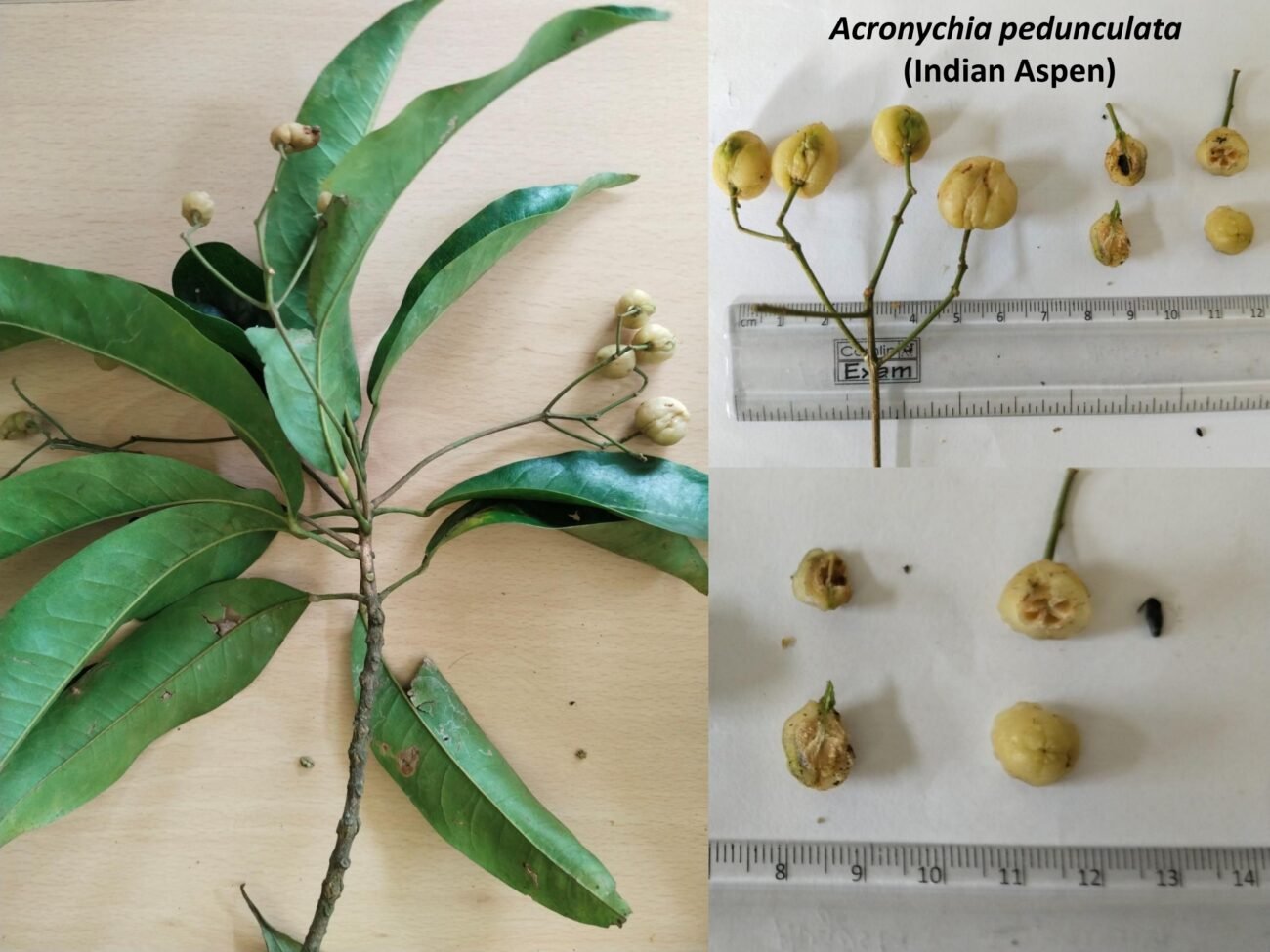
Among these lesser-known tree and shrub species of the family Rutaceae, one species that caught my attention recently is Indian Aspen (Acronychia pedunculata). At first glance, this medium-sized tree, laden with light yellow fruits, made me feel that it was no ordinary forest tree. A closer look revealed an interesting combination of aromatic foliage and edible fruits.
Getting to Know Indian Aspen
Acronychia pedunculata, commonly known as Indian Aspen, belongs to the family Rutaceae. The name Indian aspen comes from its lightweight wood, growth form, and leaf characteristics, which superficially resemble those of true aspens (Populus species). Like other members of Rutaceae, it generally grows as a large shrub or small evergreen tree in the understory, forest gaps, and along the fringes of tropical forests. This species is distributed across South and Southeast Asia, including India and other parts of the Eastern Himalaya.
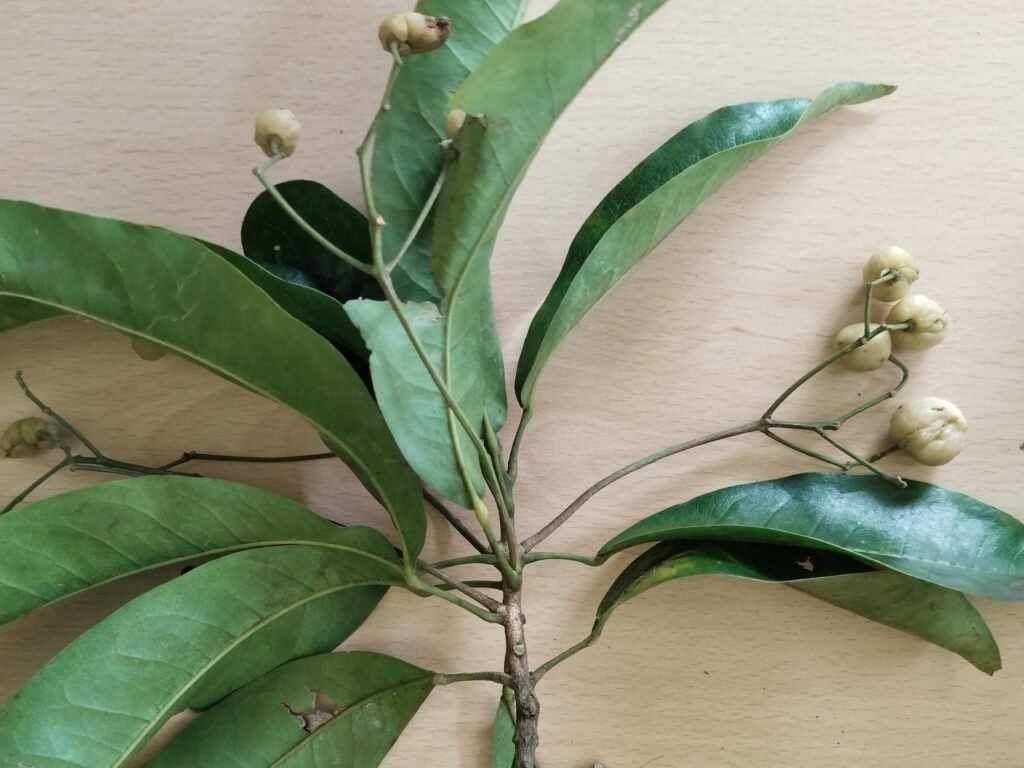
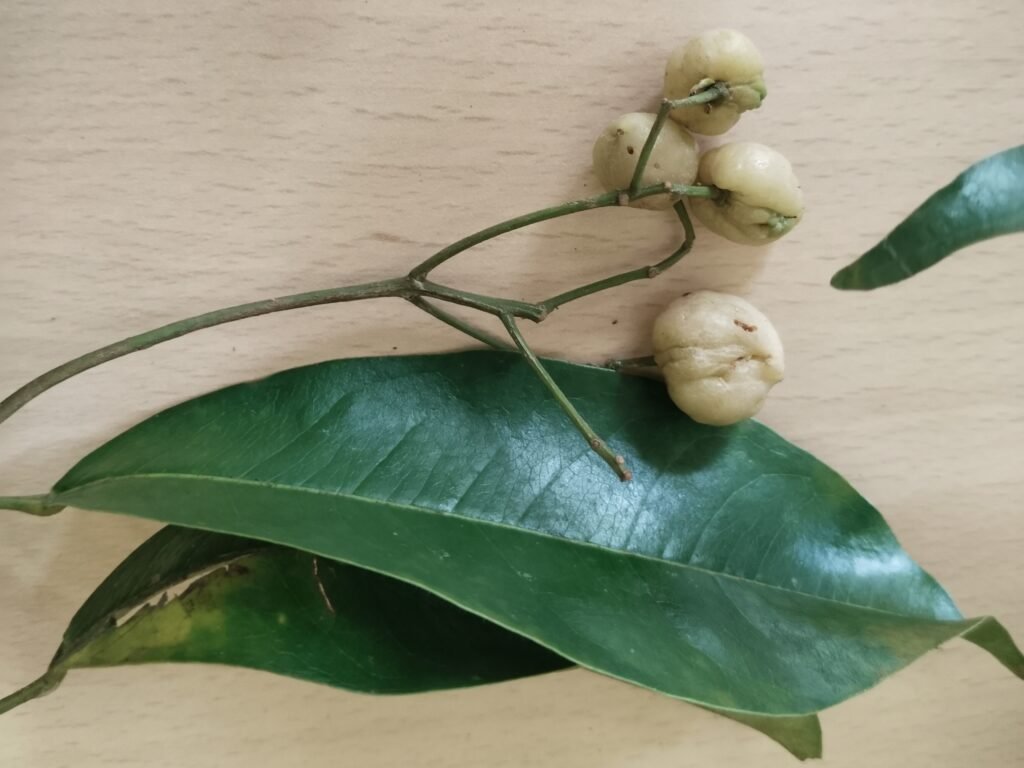
The leaves are simple, elliptic to oblong, and arranged oppositely in a decussate pattern along smooth branches that are somewhat angular. One interesting feature is the aromatic character of both the leaves and fruits, which have a distinctive scent reminiscent of a combination of citrus and mango. When the leaves and fruits of the plant are crushed, they release a distinctive resinous smell. This fragrance is associated with the volatile compounds present in the plant.
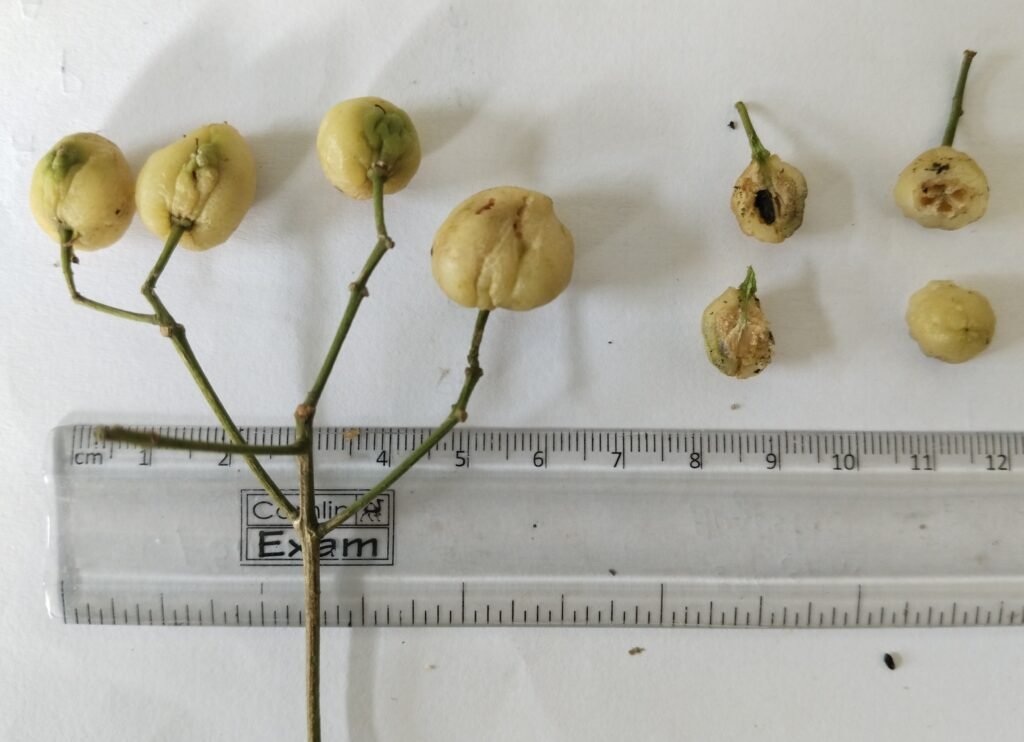
The flowers are small and greenish-white, growing in clusters from the leaf axils. In the Garo Hills, flowering generally occurs from March to August, while fruits typically mature from August to December. The tree produces small-sized (0.5 to 1.5 cm), fleshy, cream to brownish-yellow, scented fruits.
Small Fruits with an Interesting Taste
The fruits of Indian Aspen are botanically classified as drupes. Each fruit has a thick outer shell, inside which four black, safflower-seed-sized seeds are present. These small fruits, about 0.5–1.5 cm in size, may not look as attractive as commercially grown large fruits, but their sweet and sour taste makes them interesting. Like amla, Indian Aspen could also be explored for cultivation as a useful fruit tree. Ripe fruits are reported to have a sweet and sour flavour. In contrast, unripe fruits have a strongly astringent, resinous taste that leaves a drying sensation in the mouth.
Although the ripe fruits are edible, Indian Aspen is not widely cultivated as a commercial fruit tree. This raises an interesting question: how many other edible forest fruits grow around us without receiving the attention given to familiar cultivated species?
For me, working in agroforestry, such plants deserve closer and more detailed observation. Understanding their fruiting seasons, seed germination, propagation requirements, and nutritional composition could help determine whether they have potential for wider use.
Traditional Uses and Phytochemical Interest
Apart from eating the ripe fruits raw, the tender leaves are also used in salads or as a condiment in some regions. Plant parts, including the leaves, bark, stems, and fruits, have also been used in traditional herbal preparations for skin complaints and other ailments. The species has gained scientific interest because of its diverse phytochemical composition. Studies have investigated compounds belonging to groups such as flavonoids, acetophenones, alkaloids, coumarins, lignans, and terpenoids. Its aromatic oils contain volatile compounds that contribute to its characteristic fragrance.
Earlier researchers have also examined extracts and isolated compounds for antioxidant, antimicrobial, anti-inflammatory, and other biological activities. Some compounds have shown promising effects in laboratory studies, including investigations involving cancer cells.
This Indian aspen wood has also been used for various purposes such as carving, poles, and construction in parts of its distribution range. These varied uses demonstrate how a single species can contribute to local knowledge and resource utilisation in different ways.
Why Should We Pay Attention to Such Trees?
In many cases, some native species remain relatively unfamiliar outside their local communities. Indian Aspen is one example of a tree that deserves greater attention from botanists, agroforesters, researchers, and plant enthusiasts. Documenting its distribution, local names, traditional uses, and natural regeneration would help us understand its role in forest ecosystems. Research on nursery propagation, cultivation, and product development could also explore its suitability for conservation-oriented agroforestry systems.
For me, exploring the plant diversity is a continuous learning experience. Every unfamiliar wild plant species offers an opportunity to understand another part of the forest and the relationship between plants and people. Indian Aspen may not be a common name in our fruit markets, but its aromatic leaves, edible ripe fruits, and diverse phytochemicals make it an interesting native forest resource.
Sometimes, the most valuable discoveries in nature begin simply by stopping beside an unfamiliar species, observing it closely and asking a few questions. Perhaps this is one of the most rewarding aspects of being an agroforester in Northeast India. Happy to continue the opportunity to discover, document, and share the stories of plants that have quietly grown in our surrounding areas for generations.

