
You may have come across a beautiful cane chair, basket, or elegant sofa. But have you ever wondered where the material came from?
Its story may have begun with a plant growing deep inside a tropical forest.
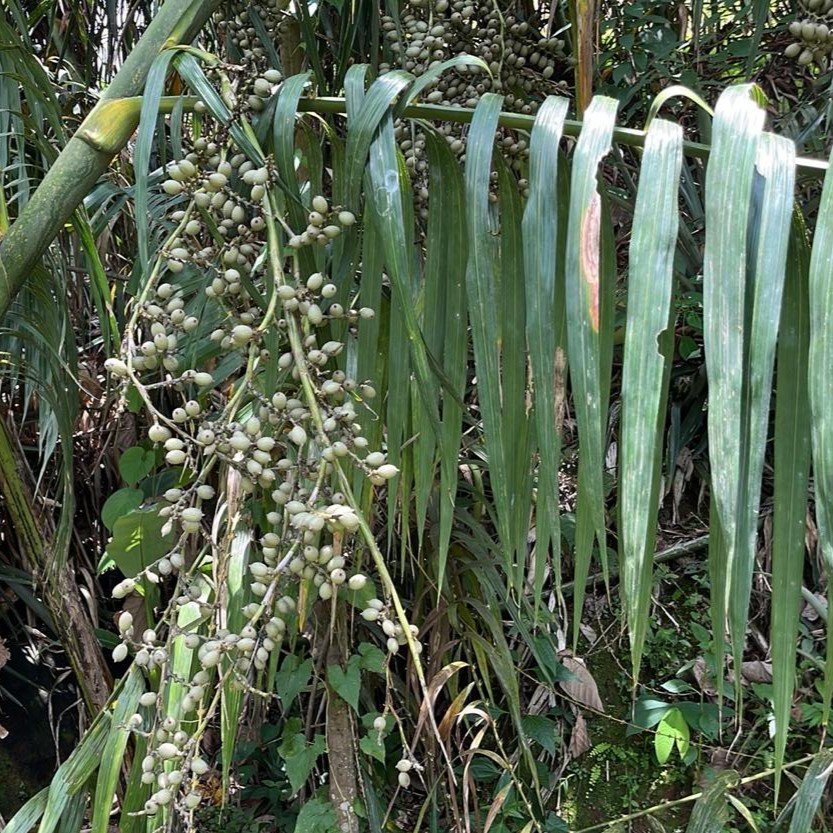
But did you know that some rattans used as cane can also produce edible shoots and fruits?
This was one of the things that caught our attention when we explored the forests of Northeast India. We have seen many cane species during our weekend field visits, but Calamus floribundus was particularly interesting because of its thick, thorny stems, colourful fruits, and importance as a cane for furniture.
So, what exactly is this plant?
If you want to know more about this interesting plant through visuals, you can watch our educational YouTube video.
Otherwise, you can continue reading here to learn more about Calamus floribundus, its habitat, identification, edible and medicinal uses, and economic importance.
Calamus floribundus Griff. is a rattan belonging to the palm family Arecaceae. Rattans are climbing palms that usually grow around trees for support and climb towards the forest canopy.
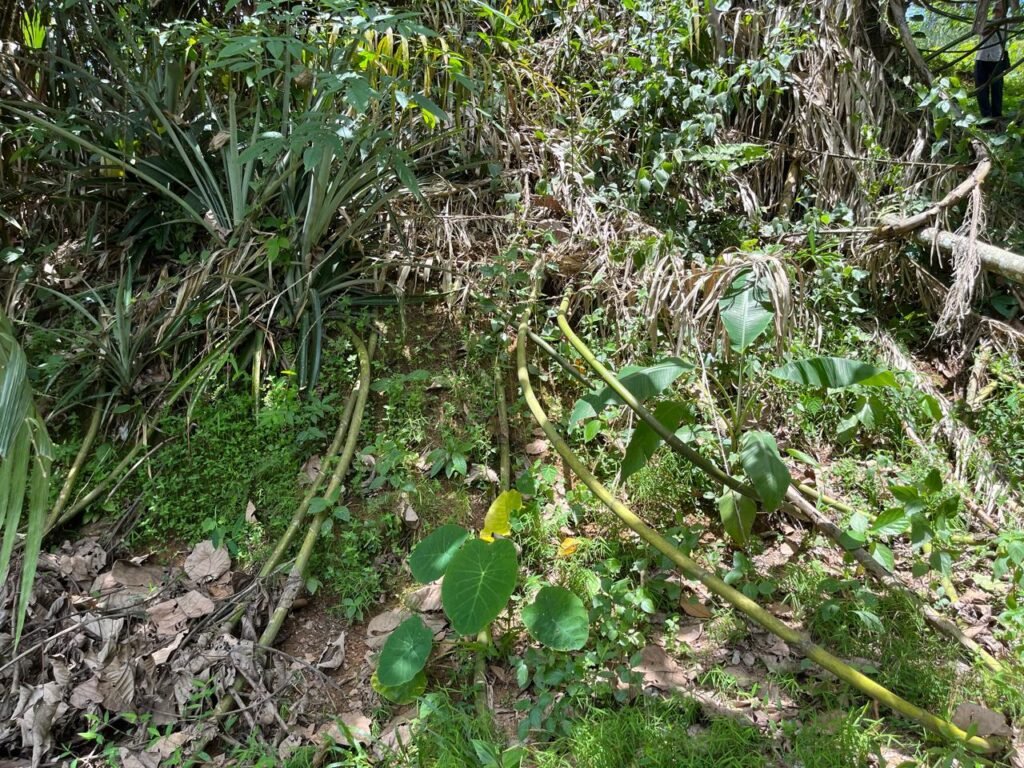
When we first noticed this cane species, its thorny appearance made it difficult to approach. The leaf sheath is armed with numerous spines, which can make field observation quite challenging. But once you look carefully, these features become useful for identifying the plant.
Unlike a tree with a single trunk, several canes can arise together from a clump. The stems then grow upward and climb into nearby trees. In this way, the forest canopy acts almost like a natural ladder for the rattan.
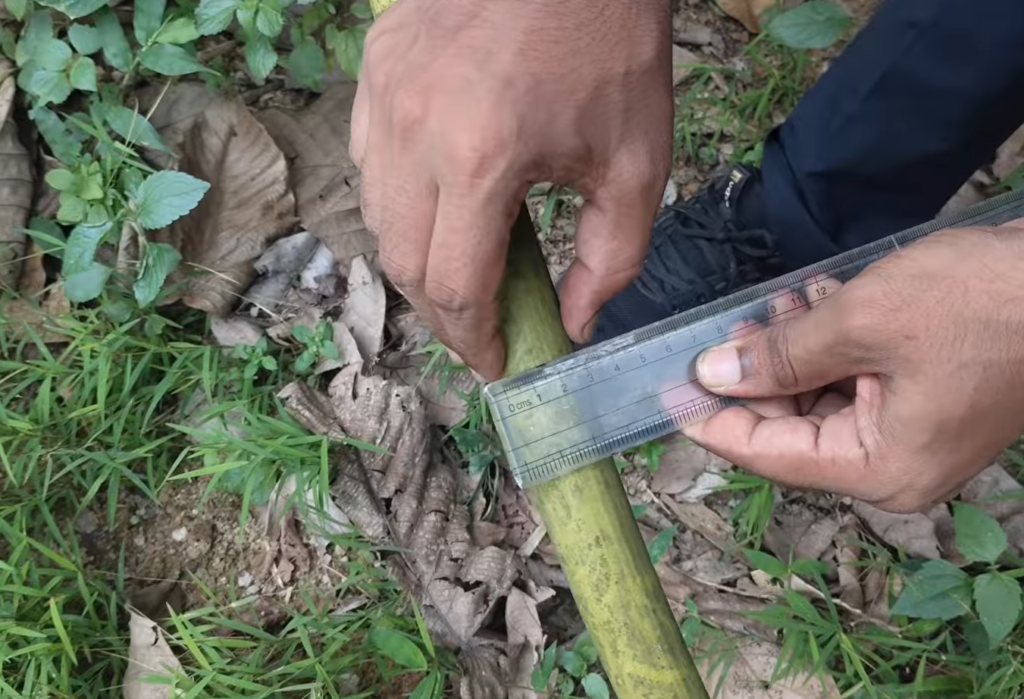
The interesting feature of Calamus floribundus is its relatively thick canes.
The stems can reach a large diameter, making them useful for highly economic furniture and other cane products. After the leaf sheath is removed, the stem has a smooth surface and long internodes, which are useful characteristics when selecting cane for different purposes.
Besides these uses, it can also provide edible young shoots and fruits.
The tender shoots of this rattan are traditionally consumed as vegetables. It has been reported as one of the edible rattan species of Northeast India. Studies have also reported useful nutritional components in these rattan shoots, including dietary fibre, minerals, and other nutrients.
And what about the fruits?
The colourful fruits are another fascinating part of this plant. They also provide food resources that are often overlooked.
So, if this plant provides food, can it also provide livelihood?
Yes, particularly through its cane.
Rattan has been traditionally used for making furniture, baskets, mats, handicrafts, and other household products. Larger-diameter canes are especially valuable for furniture frames and structural components, while smaller canes can be used for weaving, binding and decorative work.
This makes Calamus floribundus interesting from both an ecological and economic perspective.
But there is an important question.
If this cane is useful and has good economic value, should we simply collect more from the forest?
Definitely not.
Like many other forest species, rattans can face pressure from habitat loss, deforestation, shifting cultivation, and unsustainable harvesting.
Therefore, propagation, cultivation, and conservation are important.
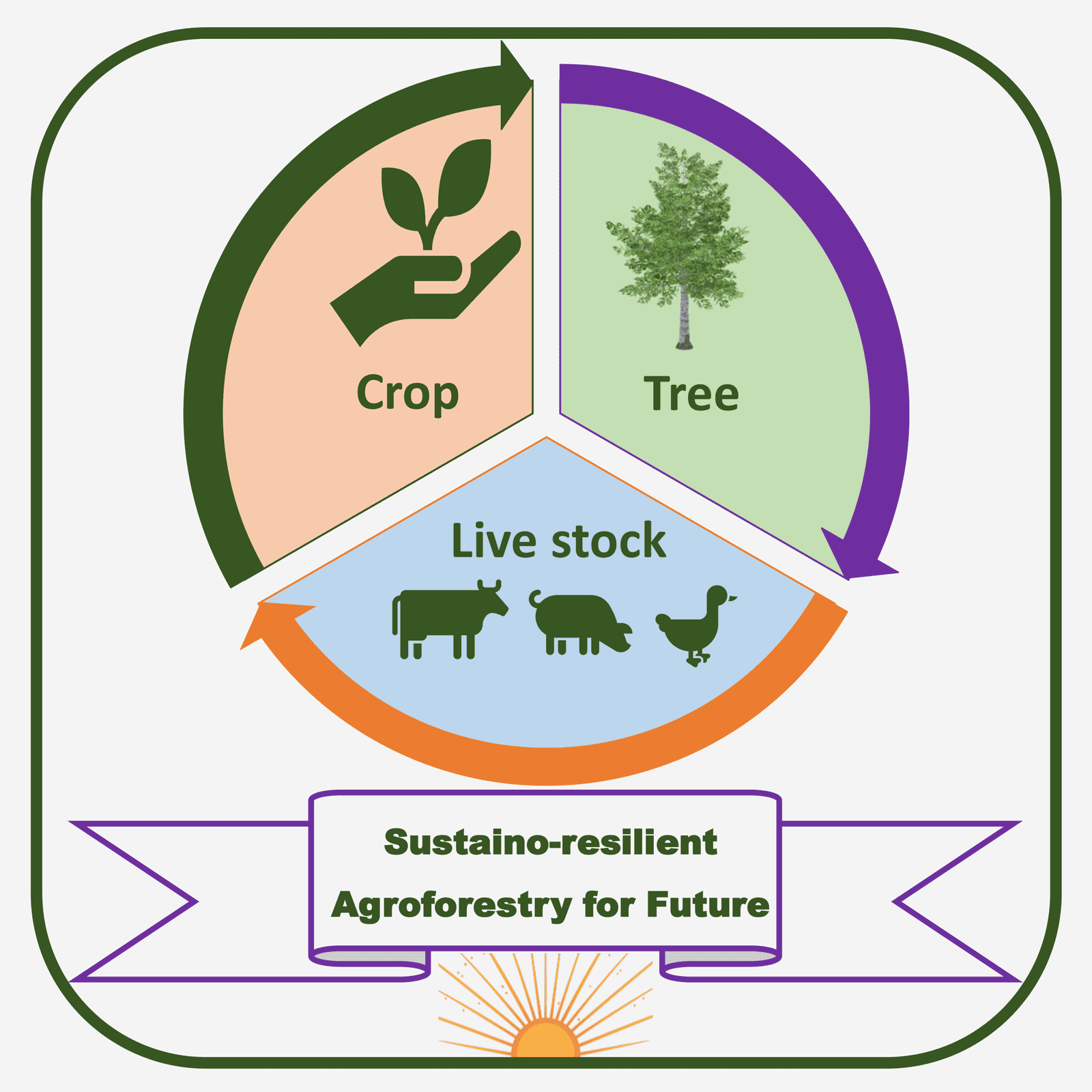
If suitable elite planting material can be produced and proper cultivation practices are developed, C. floribundus could potentially be integrated into suitable agroforestry systems. As a shade-loving climbing plant, it may grow under appropriate tree-based systems where the trees can provide natural support.
Such cane-based agroforestry integration could provide farmers with an additional source of income while also improving agrobiodiversity.
Imagine a farmer growing arecanut with native commercial trees while also maintaining suitable rattan species supported by native host trees. This reduces dependence on wild collection, and the resource could be produced in a managed system.
But there is still a lot to learn.
We need more research on its propagation, cultivation, growth, harvesting methods, nutritional properties, and suitable agroforestry combinations.
We also need to understand how local artisans can be supported so that traditional knowledge and modern sustainable resource management can work together.
For me, Calamus floribundus is a perfect example of why we should look more carefully at the lesser-known underutilized plants around us.
At first glance, it may look like nothing more than a thorny climbing palm hidden inside the forest.
But look a little closer, and you will find a plant connected with food, furniture, forests, biodiversity and livelihoods.
The best way to conserve such canes is not simply to protect them in the forest, but also to understand their value and explore ways to grow and use them sustainably.
Stay with us, and soon we’ll bring you another fascinating plant story.
If you want to know more about this interesting cane, you can watch our educational YouTube video.

