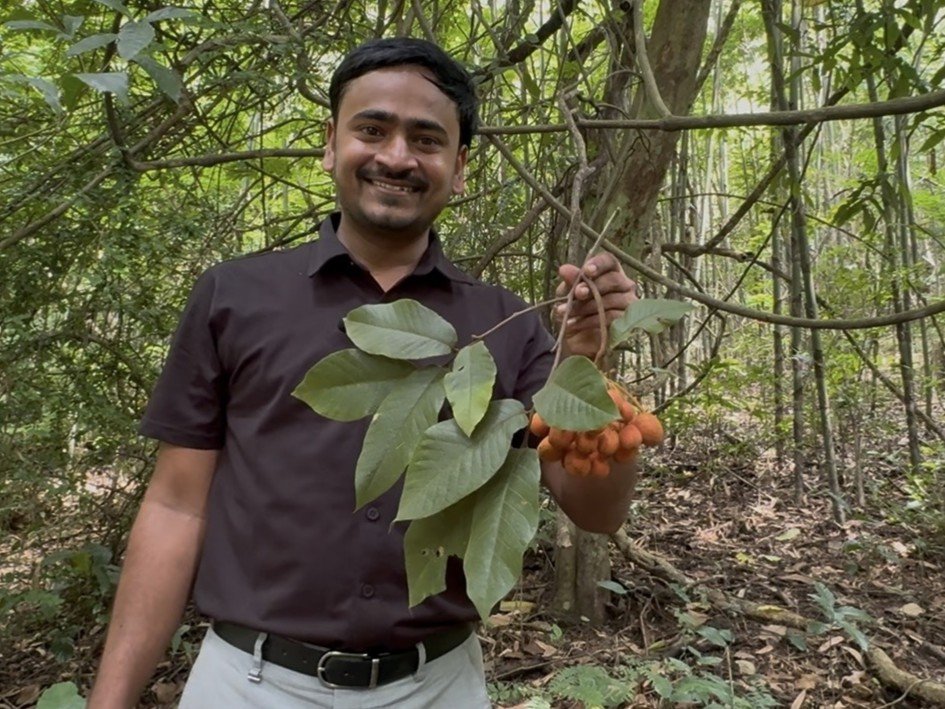
It has been five years since I started working on wild edible plants. I feel blessed to have observed and tasted many of them, from my native state of Karnataka to my place of study in West Bengal, my early career in Bihar, and my present workplace in Meghalaya.
Still, there is a lot more to learn, observe, explore, and taste.
Some wild edible plants are common enough to be noticed everywhere. Others can be found only in undisturbed pristine forests, and we need to observe carefully to notice them.
Uvaria hamiltonii Hook.f. & Thomson is one such fascinating plant.
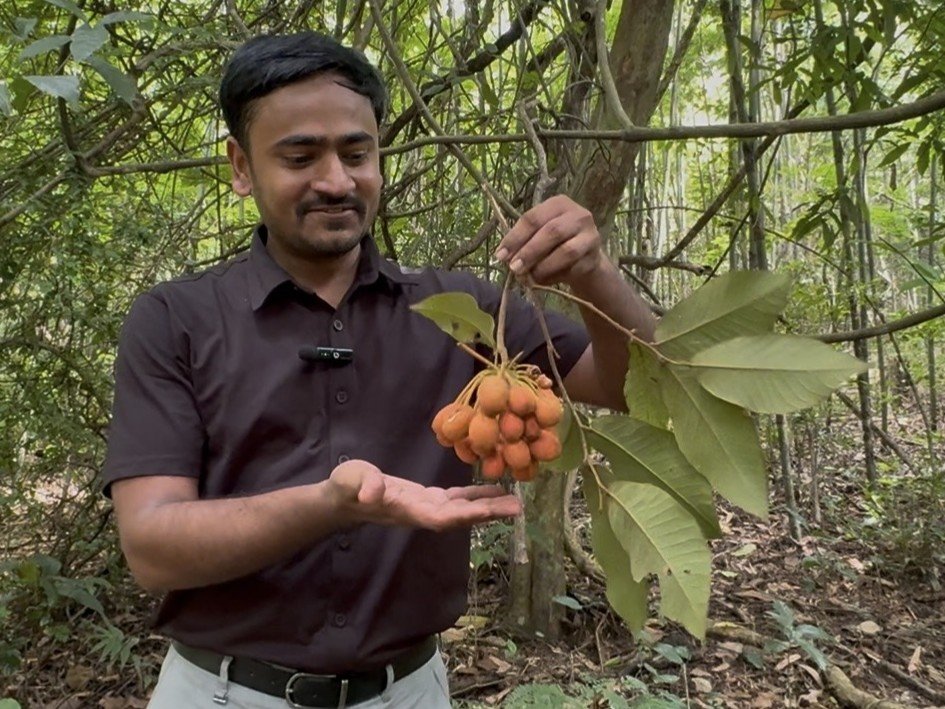
During our observations in an interior village of the Garo Hills, we came across these beautiful fruits being sold in the local market.
A small bunch containing fewer than 50 fruits was being sold for just ₹20.
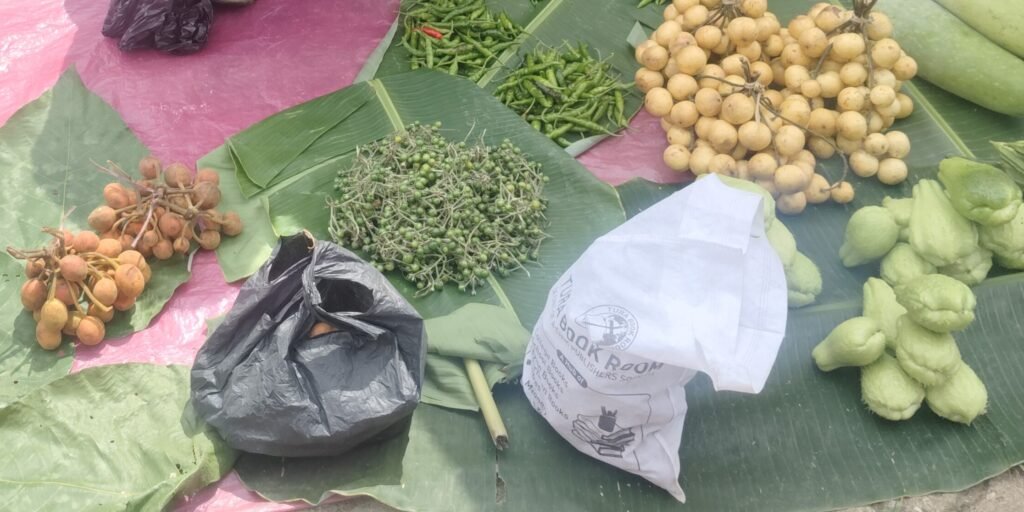
We purchased the fruits and tasted them. The pulp tasted sweet and sour. When we opened these Eastern Uvaria fruits, their appearance reminded us of a custard apple. Interestingly, the plant also belongs to the Annonaceae family, commonly known as the custard apple family.
We later purchased the fruits in bulk, and with the seller’s permission, we took a photograph while following community guidelines and respecting local permission.
Later, we also had the opportunity to see this woody climber growing naturally in forested landscapes.
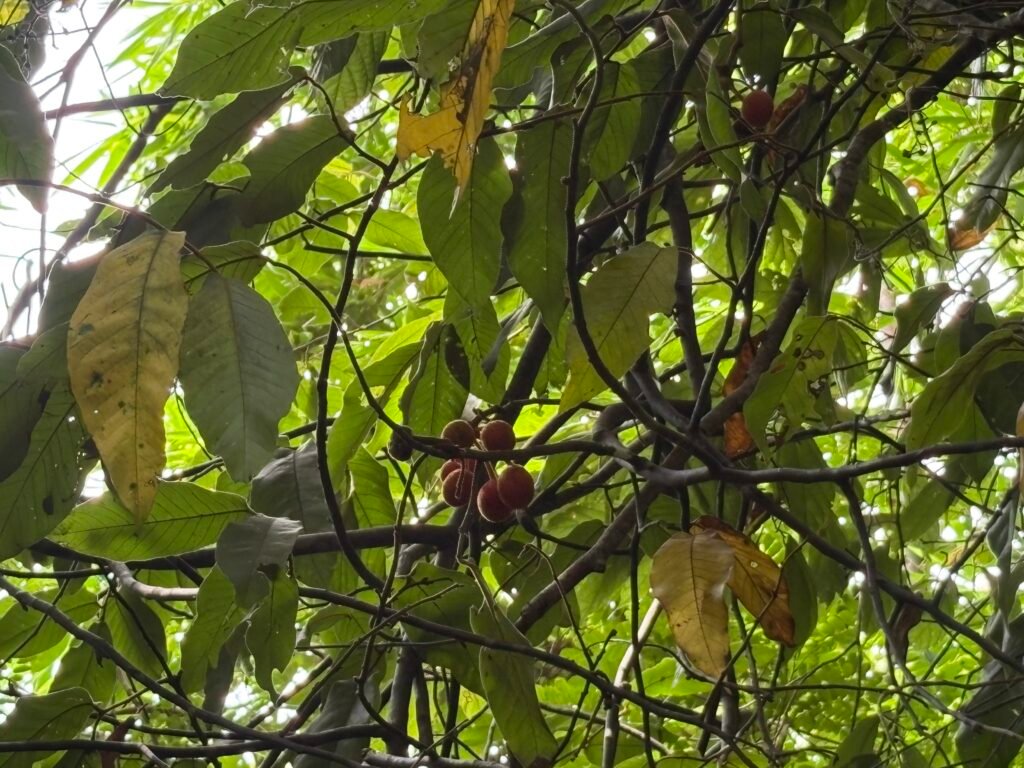
What makes this species particularly interesting is its scattered or sporadic distribution. It is not a plant that can be seen everywhere in the landscape. Instead, it occurs in scattered patches, mainly in relatively undisturbed, pristine habitats.
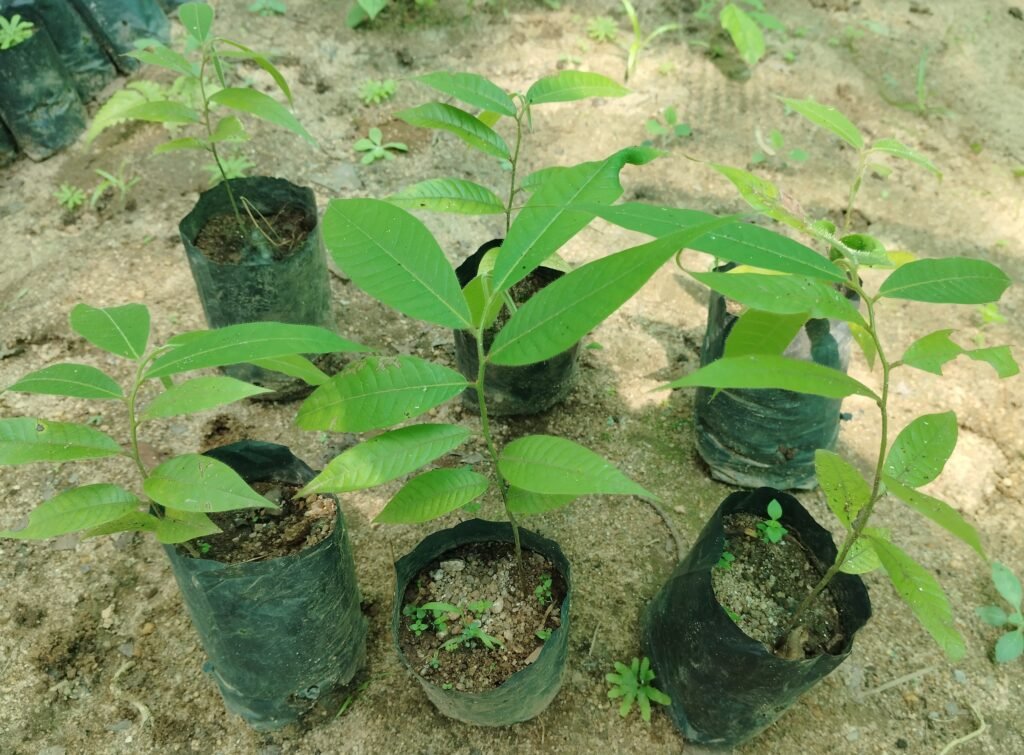
However, in some protected and less-disturbed forest patches, we observed encouraging natural regeneration. Young plants, including a good number of 1 m-tall saplings, were found growing beneath the forest canopy and in other suitable habitats.
This observation gives us an important hint.
Perhaps this rare species is not disappearing everywhere.
Instead, it may still have a good capacity for natural regeneration when its habitat remains undisturbed and intact.
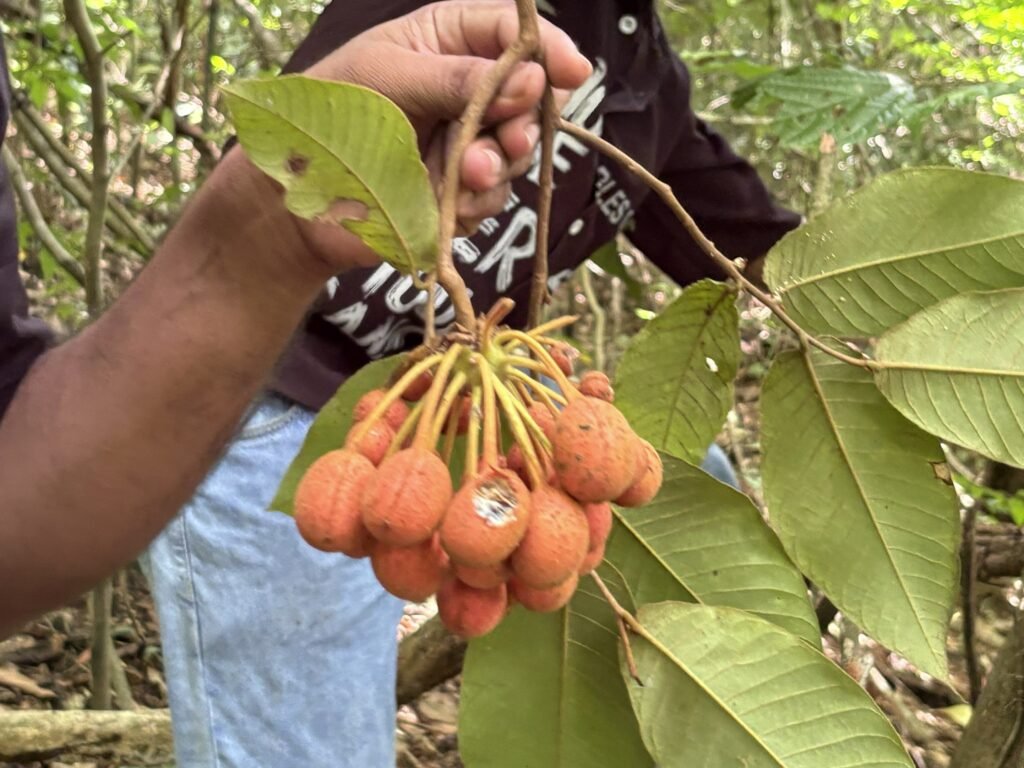
The young branches and leaves are characteristically hairy, and the leaves are simple, generally elliptic to oblong. The scented, edible flowers are very attractive, often described as deep red or scarlet, with the typical floral structure of Annonaceae: three sepals and six petals arranged in two whorls.
The plant produces clusters of fleshy fruiting bodies containing several seeds.
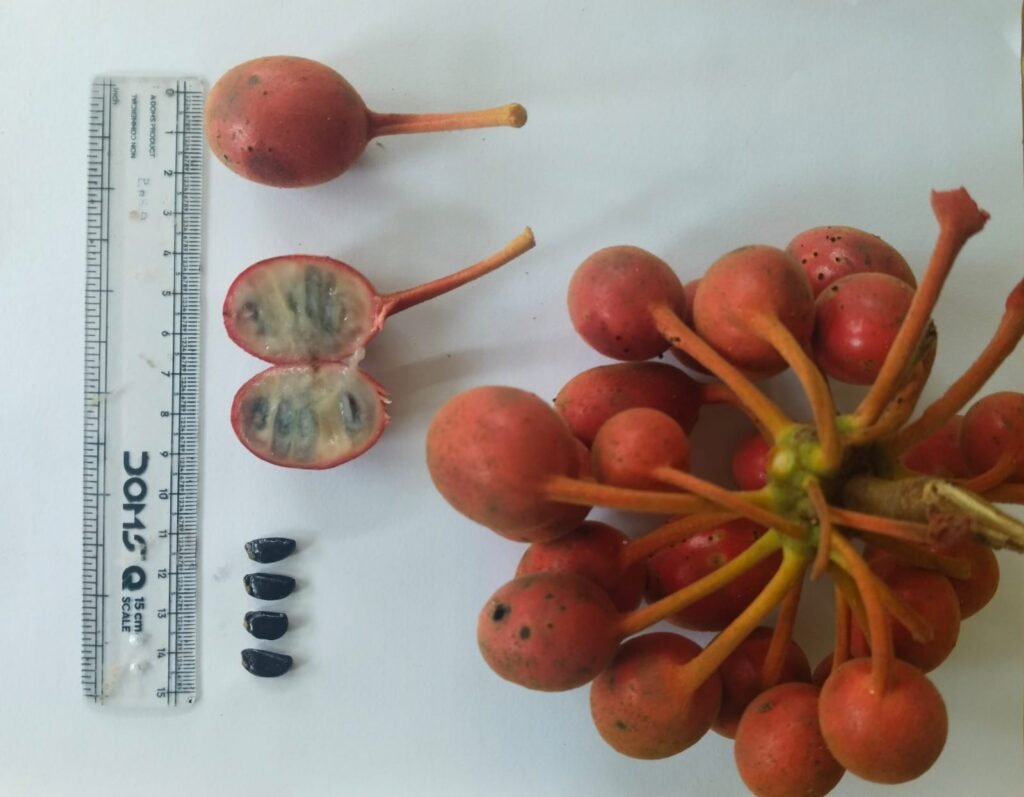
Like many wild fruit-bearing climbers, this Eastern Uvaria may easily escape attention when it is not flowering or fruiting.
One may walk under this rare liana many times without noticing it.
The species is generally associated with moist forest habitats, stream banks, gullies, and watercourses.
This Eastern Uvaria has a wide but scattered distribution across South and Southeast Asia. Within India, it is reported to occur in the northeastern regions, small patches of the Eastern Ghats, and the Andaman Islands.
Although it occurs across many regions, it remains rare in many local areas.
It usually grows in small, scattered patches rather than being found everywhere.
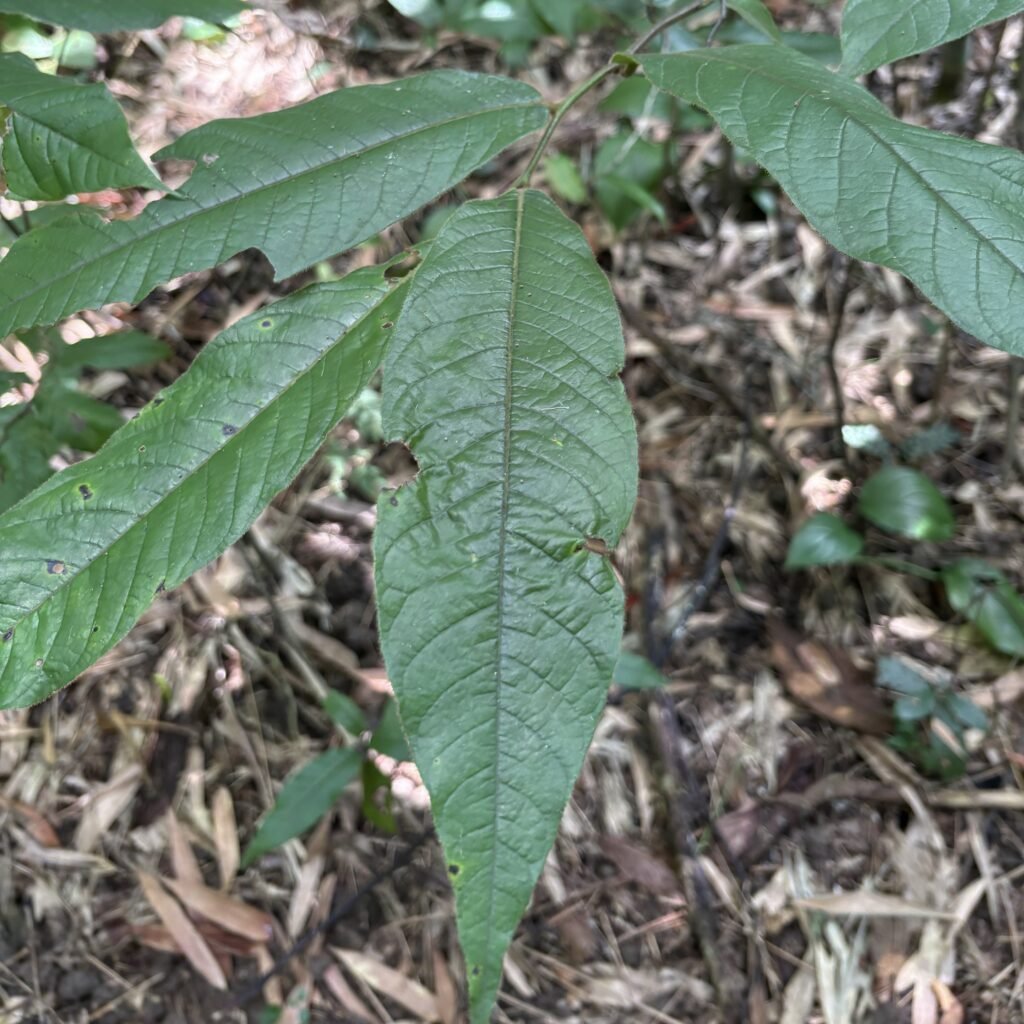
Interestingly, both the fruits and the scented flowers are consumed by many forest-fringe communities. The plant is known by different local names in different parts of India, including Terukkalwang in Garo, Zawl-thei in Mizoram, and Taipak in Tripura.
These wild fruits deserve greater attention, not only for their possible nutritional value but also for their potential role in local markets, livelihood opportunities, and biodiversity-based food systems.
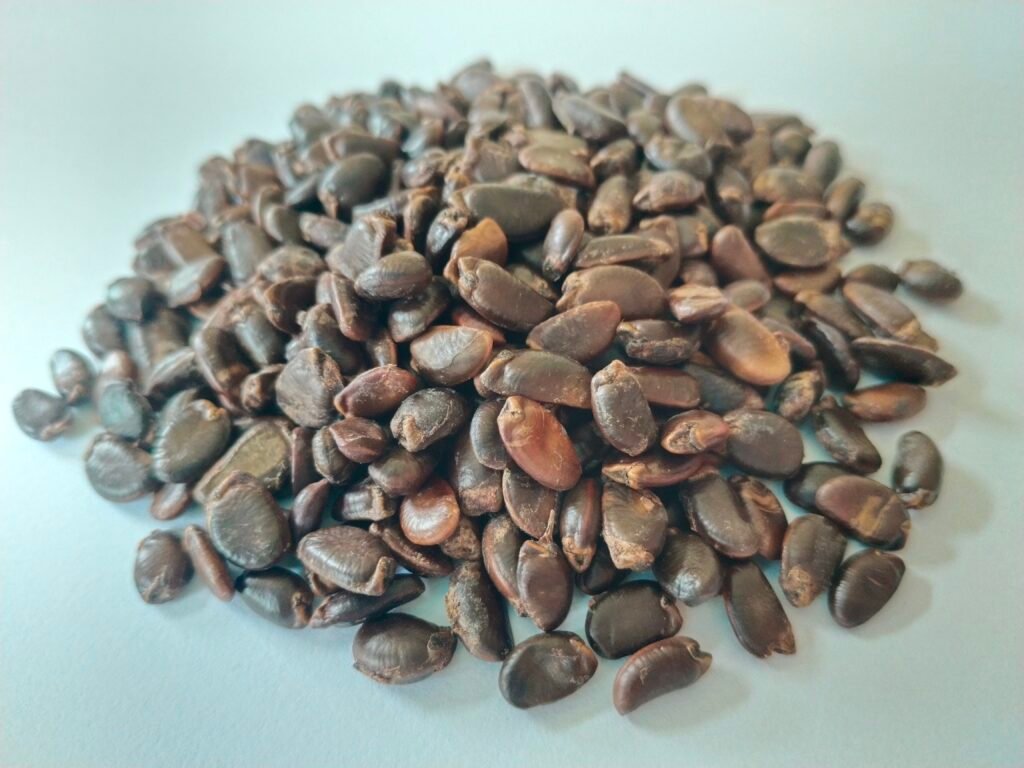
Traditional knowledge and published reports indicate that leaves, flowers, and fruits of Uvaria hamiltonii have been used in folk medicine for ailments including fever, malaria, jaundice, bronchial complaints, and minor infections.
However, traditional use should not be considered as proof of clinical effectiveness.
Further studies on propagation, phytochemical, toxicological, and clinical studies are much needed.
Our observation of good natural regeneration in undisturbed forest patches is one of the most hopeful parts of this plant’s story.
It suggests that habitat protection may be as important as artificial propagation.
For rare and sporadically distributed species such as Uvaria hamiltonii, conserving small, patchy forest sites can make a huge difference.
Sometimes conservation is not about planting thousands of seedlings.
It may begin simply by protecting the few places where nature is already quietly doing the work.

