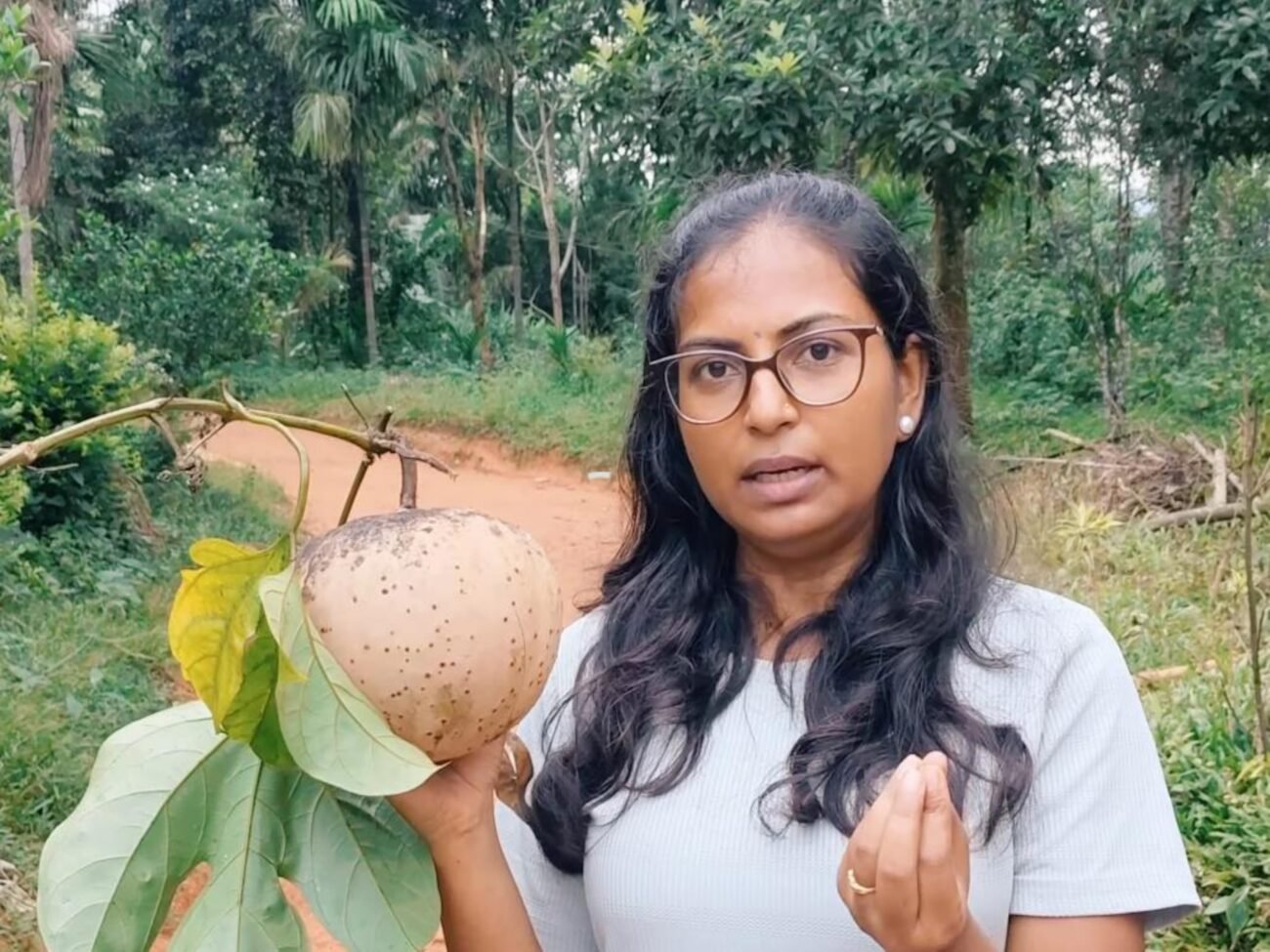
During our university’s 15-day summer break, we started visiting different villages near our university every day. One day, while visiting a friend’s home, we noticed a strange, ribbed, pumpkin-like fruit growing on a giant liana high in the canopy of a large tree. It may look like a gourd, but hidden inside is something far more valuable than its flesh: the oil-rich seeds of Hodgsonia, popularly known as Lard Fruit or the “pork-fat nut.”
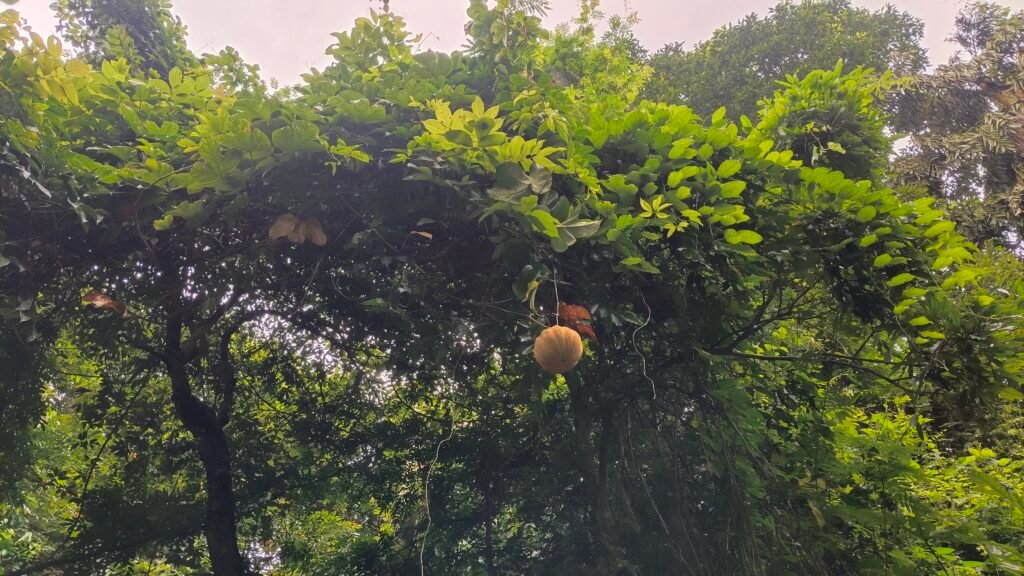
This little-known, underutilized gourd-like fruit brings together three fascinating worlds: traditional food, valuable cooking oil, and renewable energy. In the Garo Hills of Meghalaya, where the vine can produce fruits from June to August, Hodgsonia reminds us that some of the most promising plants for the future may already be growing quietly in our forests.
A fruit that hides its real treasure
Hodgsonia macrocarpa (Blume) Cogn. belongs to the Cucurbitaceae, the same botanical family that includes gourds, pumpkins, cucumbers and melons. Unlike many familiar cucurbits, however, Hodgsonia is a large, perennial climbing vine that can extend to around 25–30 metres and live for more than 70 years. In the wild, it commonly climbs over large trees and uses existing woody vegetation as its support. Research has highlighted this growth habit as one of the reasons the species has potential for integration into agroforestry systems.
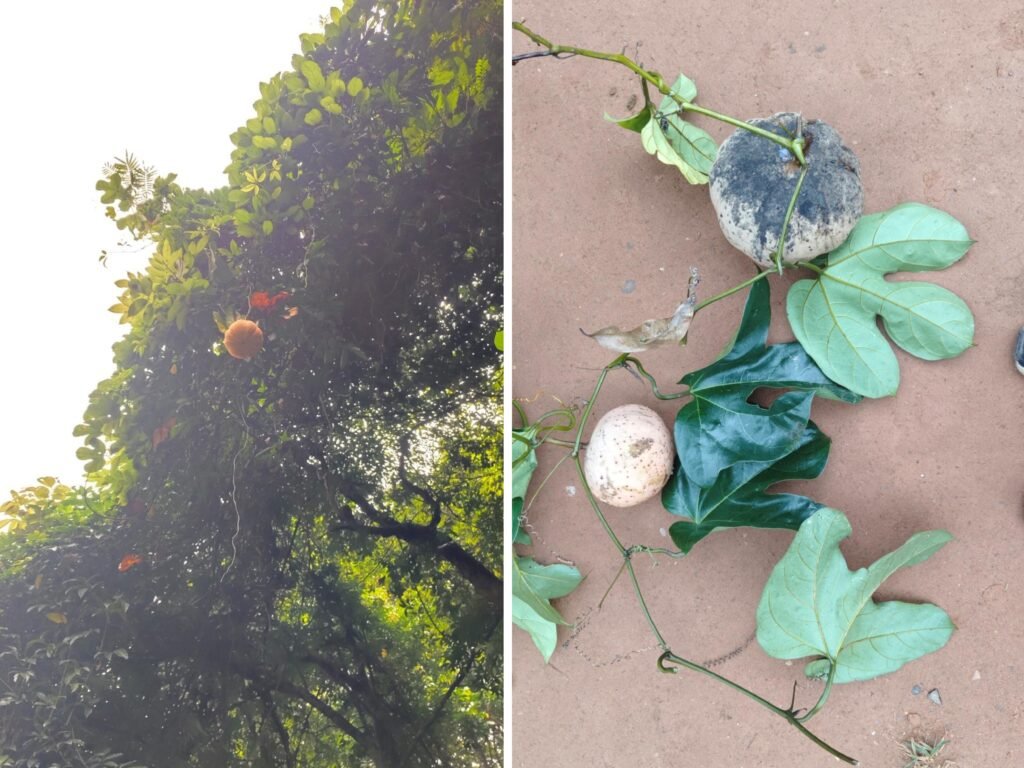
The fruit itself is impressive. Depending on growing conditions, it may be roughly 10–20 cm long and 20–25 cm across, with a flattened, rounded or pomiform shape and several shallow grooves. As it matures, the fruit develops a red-brown colour.
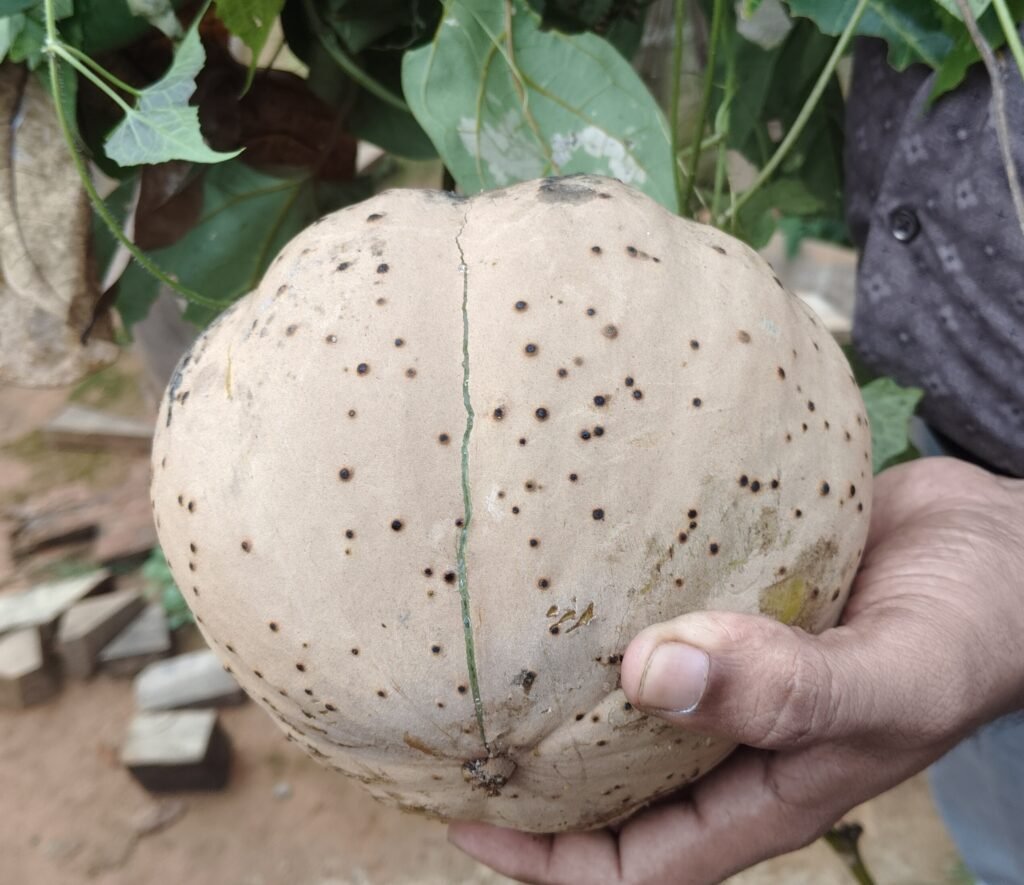
But here comes the surprise: the fleshy pulp is not the main edible part.
Inside each fruit, there are usually six large seeds enclosed in a hard, multilayered covering. Once the tough coverings are removed, the edible kernels reveal their pale ivory colour. The raw kernels can be bitter and astringent, but traditional roasting or boiling changes their character completely. They become soft, chewy, and rich, with a distinctive savoury flavour that has been compared to pork meat or pork fat. This unusual flavour is believed to be the origin of the common English name “Lard Fruit.”
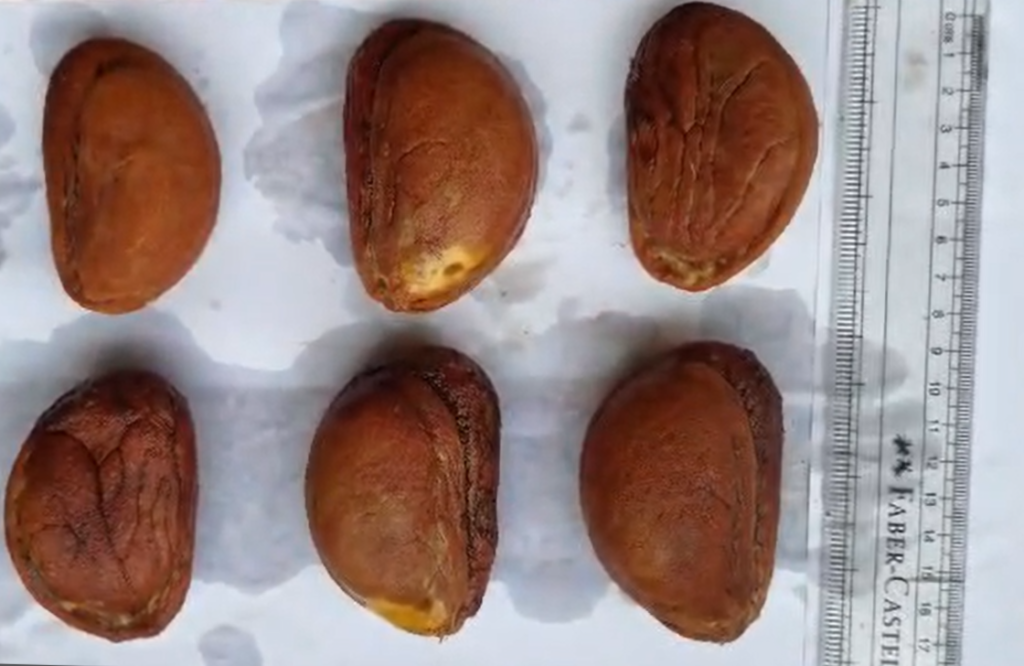
A seasonal forest delicacy
For indigenous communities in Assam, Meghalaya, and Tripura, Hodgsonia is much more than an unusual fruit. Its seeds have traditionally been collected, processed, and eaten as a seasonal food.
In Tripura, Reang and Chakma communities have traditionally consumed roasted seeds as a nutritious snack, with this knowledge being passed down from one generation to the next.
Here, the mature fruit is opened, and the seeds are separated from the pulp. The seeds, along with their hard outer covering, are then roasted over hot charcoal or an open flame. After cooling, the hard coat is cracked, and the edible kernels are consumed.
In different parts of Northeast India, the seeds are also incorporated into traditional dishes or processed into oil. They can add a rich, nutty, and savoury character to diverse local culinary preparations.
The hidden oil inside the seed
Here is where Hodgsonia becomes particularly exciting for researchers.
The seeds are not simply edible, but they are extremely oil-rich.
A study on Hodgsonia macrocarpa reported a seed oil content of 71.65% by weight, a remarkably high value compared with many conventional oilseed crops. The same study reported that the major fatty acids included palmitic acid, oleic acid, and linoleic acid.
Another study from Tripura reported that the kernel contained approximately 62.71% fat and 31.25% protein, demonstrating why Hodgsonia has traditionally been valued as both a food and cooking oil resource.
This raises an important question:
Could a forgotten forest guard-like fruit become a future source of cooking oil?
Interestingly, the answer deserves serious investigation.
Traditional communities have already demonstrated that the seeds can be processed and their oil used for culinary purposes. In Assam, for example, Hodgsonia seeds have traditionally been pressed for oil. The combination of high oil content and established Indigenous knowledge makes the species an interesting candidate for developing small-scale, community-driven oil enterprises in forest-fringe areas.
Before recommending wider commercial consumption, this should be approached through scientific testing of food safety, oil quality, processing methods, shelf life, and consumer acceptability.
From cooking oil to biodiesel
The most fascinating chapter in the Hodgsonia story may be its connection with renewable energy.
A landmark study entitled “Production and characterization of biodiesel derived from Hodgsonia
macrocarpa seed oil” published in Applied Energy, reported biodiesel production from Hodgsonia macrocarpa seed oil. Researchers extracted oil from the seed kernels and converted it into biodiesel through transesterification. The reported biodiesel yield was 95.46% by weight under the optimized experimental conditions.
The produced biodiesel showed several encouraging fuel characteristics. Its cetane number was 51.2, while its flash point was approximately 153°C, indicating good transportation and handling safety. Its reported pour point and cold-filter plugging point were also favourable.
Most of the tested fuel properties met the specifications of ASTM D6751 and EN 14214, although oxidative stability initially presented a limitation. The study found that treatment with 400 ppm TBHQ improved oxidative stability sufficiently to meet the EN 14214 requirement.
This remarkable finding shows that a wild climbing vine traditionally valued for its edible seeds and cooking oil may also provide a renewable source of biodiesel.
Why Hodgsonia fits the agroforestry idea
There is another reason Hodgsonia deserves attention.
Unlike annual oilseed crops, this is a perennial climber that can live for many years. It can climb on existing trees and use vertical space. This makes it suitable for agroforestry, home gardens, and other tree-based systems.
Imagine a future where selected Hodgsonia vines are conserved in community forests, home gardens, and agroforestry systems. These vines could provide seasonal food and potential edible oil. Where appropriate, they could also serve as an additional feedstock for biofuel research.
That is not simply crop production. But it is biodiversity-based livelihood development.
The story of Lard Fruit also carries a warning.
Although Hodgsonia has considerable traditional and economic potential, H. macrocarpa has been described as vulnerable in the FRLHT assessment. The species is also affected by its naturally limited and seasonal fruit production.
Therefore, commercial exploitation should never begin with unscientific harvesting of wild fruits. The better pathway is conservation through sustainable domestication.
Further studies on propagation protocols, elite mother plants, community nurseries, agroforestry trials, phenological studies, pollination, seed-oil characterization, and value-addition technologies can help create a model in which utilization supports conservation rather than depleting the resource.
Follow Three Simple Propagation Paths to Conserve Lard Fruit
The journey from wild collection to sustainable domestication starts with propagation. Lard Fruit can be multiplied through seeds, softwood cuttings, and air layering. These approaches can help to bring this remarkable vine to home gardens and agroforestry systems.
- Seed propagation: Soak healthy seeds in water for 1–2 days, then sow them less than 1 inch deep in a well-drained, preferably sandy medium. Germination may begin within about two weeks.
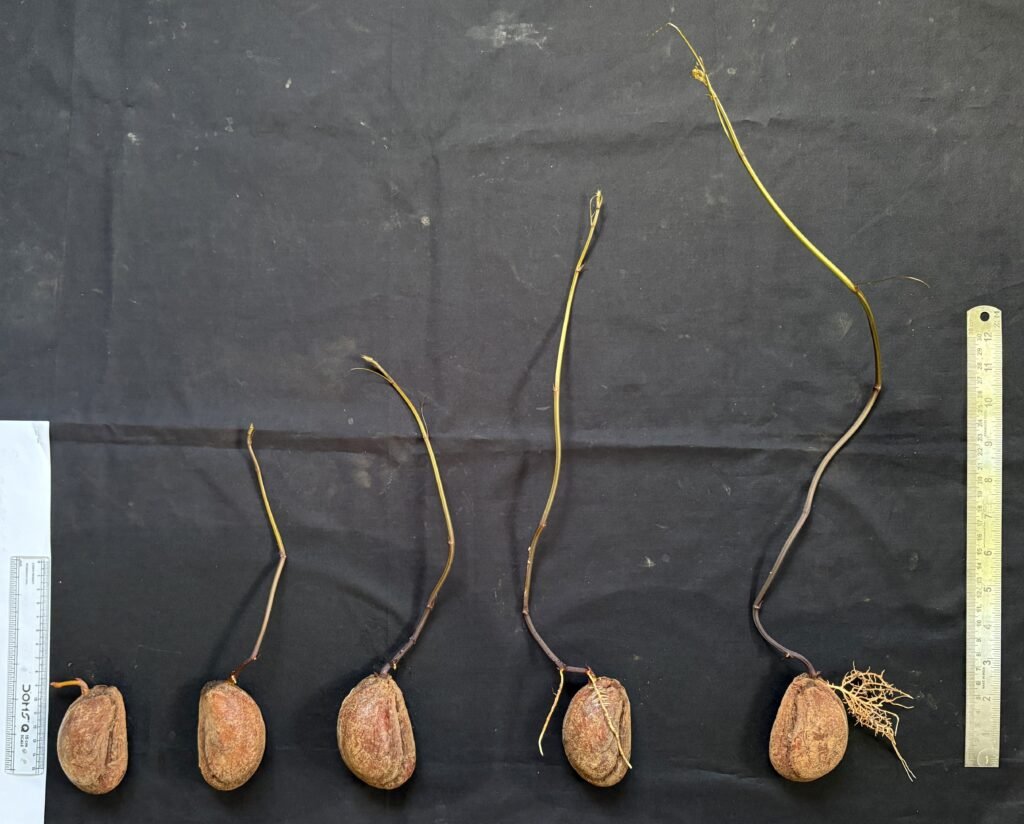
2. Softwood cuttings: Select thin, green stems with one or two nodes, treat the basal end with aloe vera gel, and plant them in coarse sand under a polythene cover for 1–2 weeks.
3. Air layering: It offers another promising option for multiplying selected plants. A study from Tripura reported around 90% success through air layering and 50% success through cuttings.
From a forgotten fruit to a future resource
This story of Hodgsonia is ultimately a story about looking differently at biodiversity.
What appears to be an ordinary forest vine may contain an edible kernel rich in protein and oil. What indigenous communities have traditionally roasted as a seasonal delicacy may also offer an opportunity for small-scale oil production. The same seed oil that has culinary importance has also demonstrated considerable potential as a biodiesel feedstock in scientific experiments, as discussed above.
Every plant has something to teach us. Next, we will return with another underutilized fruit.
We believe the future of agriculture may not always come from the plants we already know. Sometimes, the next opportunity may be hidden in plants we have almost forgotten.
Note: The biodiesel results mentioned above come from laboratory research on Hodgsonia macrocarpa seed oil. They do not prove that commercial-scale biodiesel production is feasible. Likewise, traditional food and medicinal uses should not be treated as scientifically proven health or nutritional benefits.

